








Key takeaways
- A small home office setup works when you plan around square footage first and furniture second: measure the wall and the walking path before you shop.
- Desk depth matters more than desk width in a tight room. Look for desks around 50 to 60cm deep so you keep floor space to walk past.
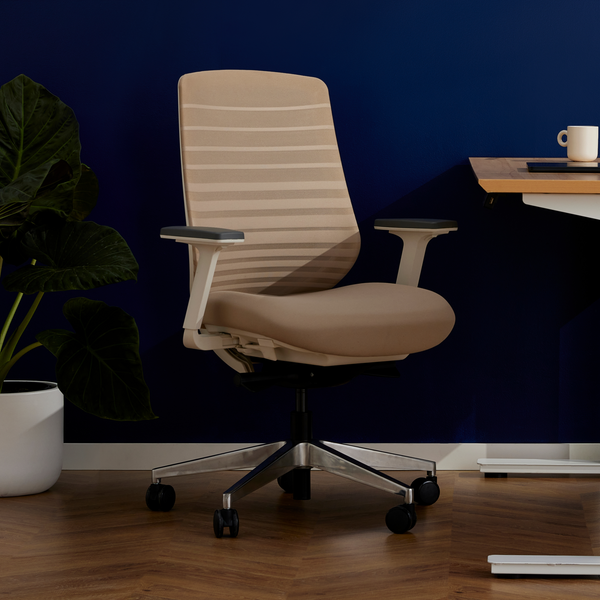
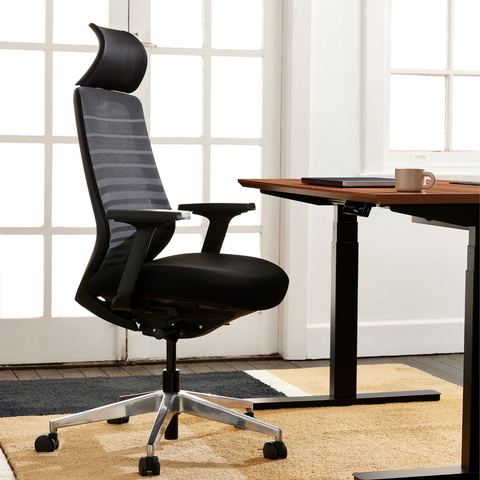
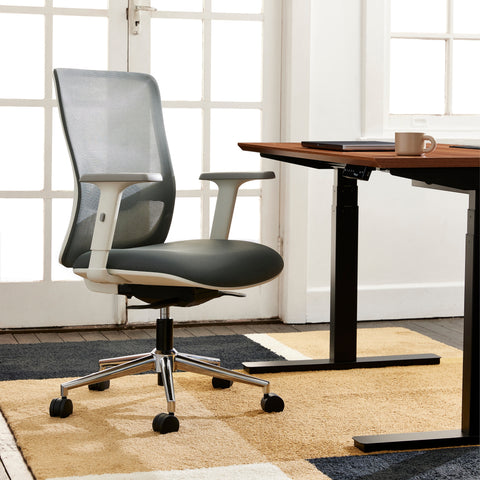
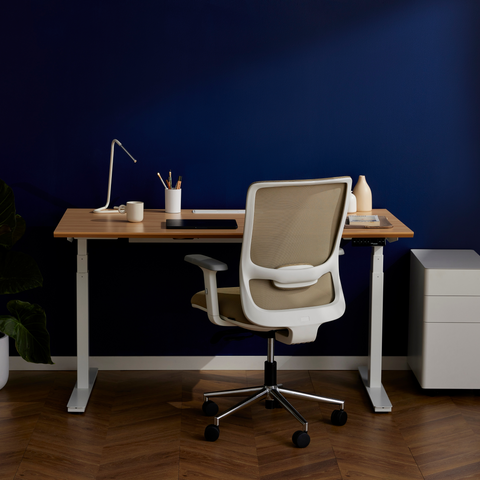
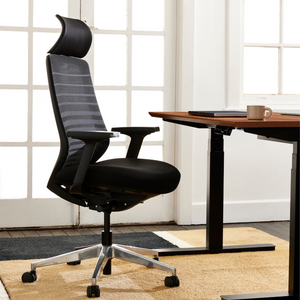
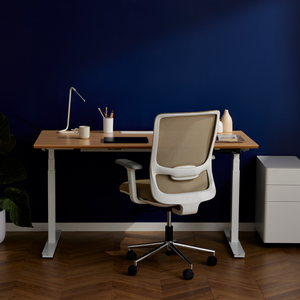
- Don't shrink the chair to save room. A proper office chair like the Ergo Chair earns its footprint because you sit in it for hours a day.
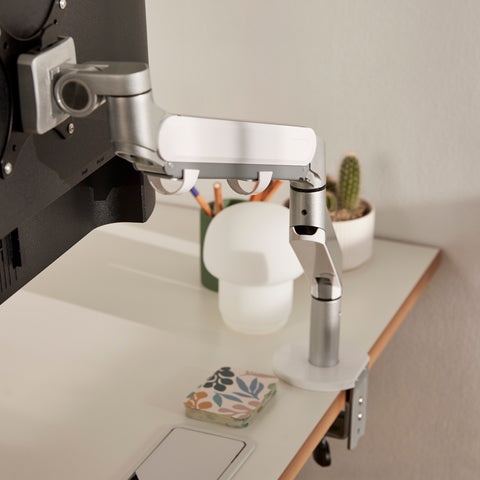
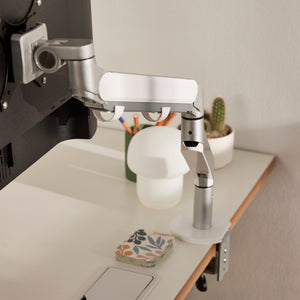
- A monitor arm frees up desk space instantly by lifting your screen off the surface and onto the wall, and using vertical space instead of the desktop.
- Visual separation, a desk screen, a rug, a change in colour, does more for a home office feel than a bigger room ever will.
Searches for sustainable office furniture in Australia have jumped because people are tired of guessing. You've seen the green leaf icons, the "eco-conscious" copy, the sustainability page with no actual data on it. None of it tells you whether a desk is built to last or just marketed to look that way.
This guide breaks the topic down into the four things that matter: what furniture is made from, how long it survives real use, which certifications carry weight, and the red flags that mean a brand is greenwashing you. Then there's a checklist you can use at the point of purchase, whether you're kitting out a home workstation or fitting out a small office in Melbourne.
What actually makes office furniture sustainable
Sustainability in furniture isn't one thing. It's a combination of where the materials come from, how the piece is made, how long it lasts, and what happens to it at the end of its life. Any brand that reduces this to a single claim ("made from recycled plastic!") is telling you a fraction of the story.
A sustainable desk or office chair scores well across all four areas, not just one. That's the standard to hold every product page to, including ours.
Materials and sourcing
Start with what the furniture is physically made of. Solid timber from a certified forest has a very different footprint to particleboard glued together with formaldehyde-based adhesives and wrapped in a thin veneer.
Look for the Forest Stewardship Council (FSC) logo on timber products. FSC certification means the wood came from a forest managed to specific environmental and social standards, not from illegal logging or unmanaged clearing. It's one of the few certifications with real, auditable teeth behind it.
Recycled materials matter too, with a caveat: recycled content in the frame or packaging is a good sign, but it doesn't make a poorly built product durable. A desk made from recycled steel that falls apart in two years still ends up in landfill. Responsibly sourced natural materials paired with solid construction are what you're after — that's how recycled content reduces waste rather than just delaying it.
Low-VOC (volatile organic compounds) finishes matter for a different reason: indoor air quality. Furniture finished with high-VOC paints, adhesives or laminates off-gasses into your workspace for months. If you're working from a spare room 40 hours a week, that's not a minor detail.
Start with what the furniture is physically made of. Solid timber from a certified forest has a very different footprint to particleboard glued together with formaldehyde-based adhesives and wrapped in a thin veneer.
Durability and lifecycle
This is the part most "eco" marketing skips, and it's arguably the most important one. A piece of furniture designed to last 15 years, get repaired rather than replaced, and eventually be resold has a far smaller footprint than a "recycled" product built to be thrown out in three.
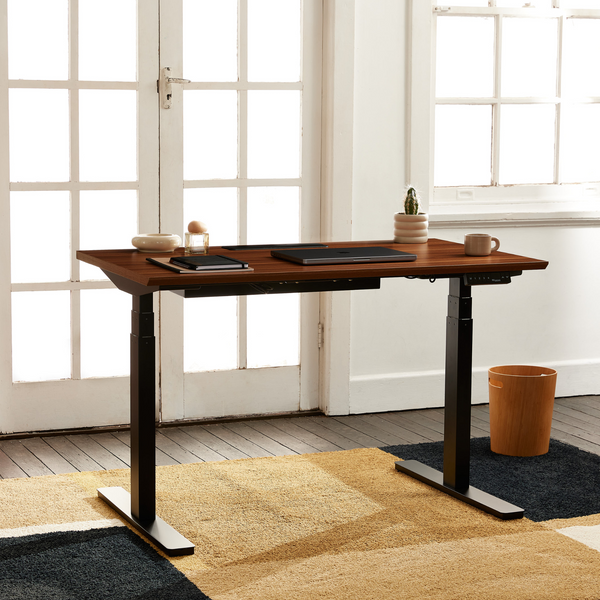
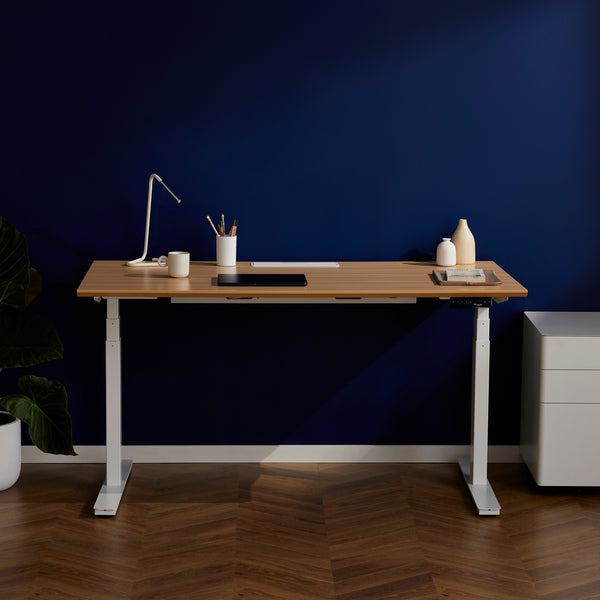
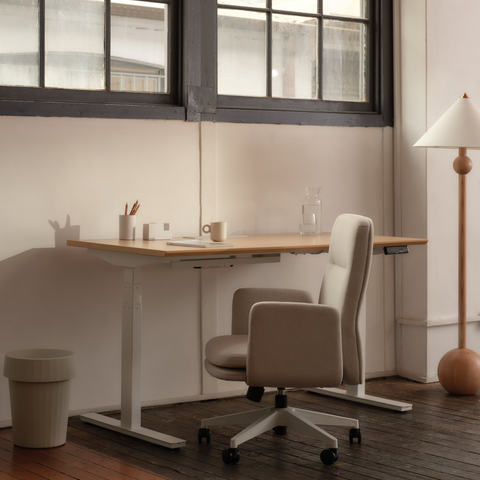
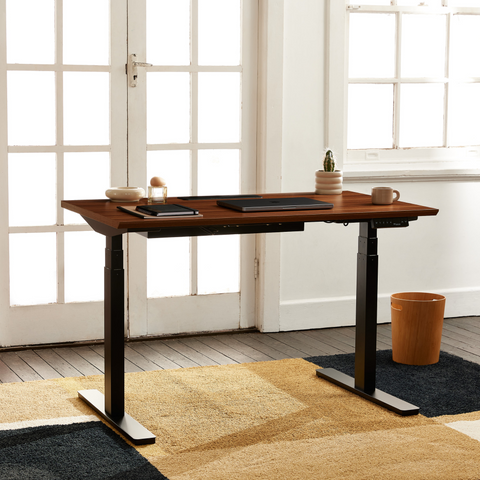
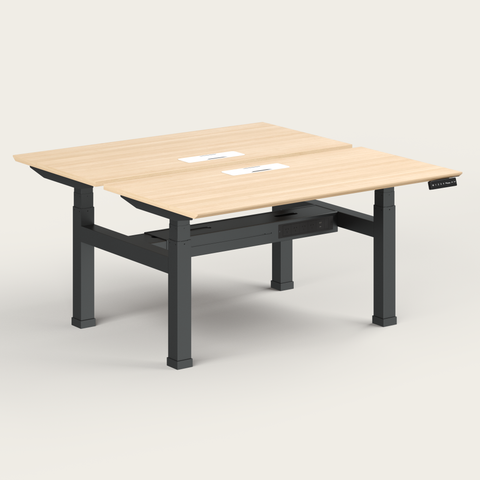
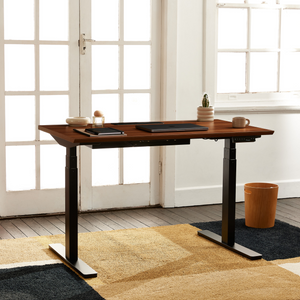
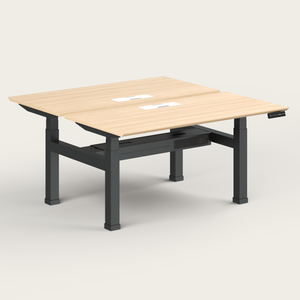
Durability is sustainability. Every year you don't replace a desk is a year without new raw materials, new manufacturing energy and new transport emissions. That's why our standing desk range uses a steel frame built to outlast multiple office moves and years of height adjustments, rather than a lighter frame that's cheaper to freight and wears out its motor in a couple of years.

Ask about warranty length before you read the sustainability page. A 10-year warranty tells you more about a product's real environmental impact than any leaf icon does, because it signals the manufacturer expects the piece to still be working a decade from now.
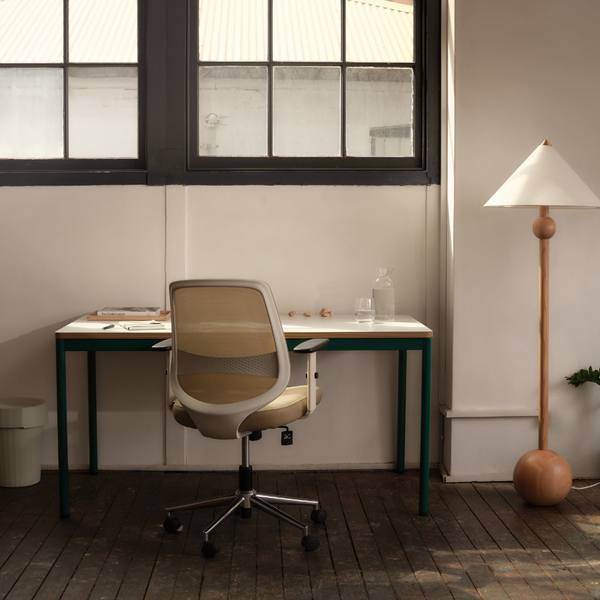
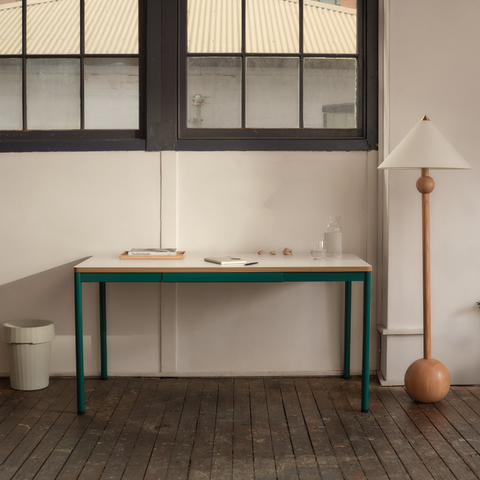
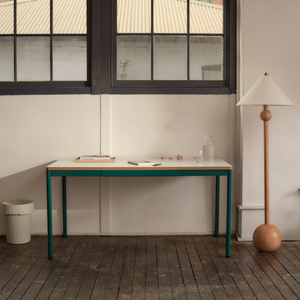
The same logic applies to something like an everyday desk for a smaller workspace: check the frame material, the surface finish, and whether replacement parts (feet, cable trays, brackets) can actually be bought, not thrown out with the whole unit if one part fails.
Certifications that actually mean something
Not all certifications are equal, and a lot of them are self-awarded, worth knowing before you trust a badge on a product page.
GECA (Good Environmental Choice Australia) is the one to look for locally. It's Australia's own multi-sector ecolabel, and it assesses furniture against independently verified environmental, health and social criteria, not just one metric like recycled content. According to GECA, its certification covers over 2,000 products and services recognised by bodies including Green Star and WELL.
The ISO 14000 family is another marker worth knowing, particularly ISO 14001, which covers how a manufacturer manages its environmental impact as a business, not just per product. It's issued through the International Organization for Standardization and it's a properly audited process, not a marketing claim.
Between FSC for timber sourcing and GECA for the finished product's full lifecycle, those two certifications cover most of what you need to check. If a brand can't point you to either, treat their sustainability claims with real scepticism.
Red flags: what greenwashing furniture actually looks like
Greenwashing follows a predictable pattern once you know what to look for.-
Vague language with no data. "Eco-friendly," "sustainably made" or "green choice" with nothing to back it up: no certification, no material breakdown, no numbers.
-
One green feature, everything else ignored. A chair made from "ocean-bound plastic" that ships with a two-year warranty and foam that off-gasses for months isn't sustainable — it's got one sustainable talking point.
-
Carbon offsets as a substitute for actual change. Offsets can be a legitimate part of a broader strategy, but a brand leading with "we offset our shipping" while using virgin plastic and cheap adhesives throughout is using offsets to distract from everything else.
-
No mention of the supply chain. If a brand won't tell you where the furniture is manufactured or under what conditions, that's not an oversight. Transparent supply chains and ethical labour tend to travel together, and a brand hiding one is usually hiding both.
- A sustainability page with no specifics. If a brand's entire environmental case is one page of stock nature photography, it's decoration, not substance.
Second hand and recycled options: a legitimate sustainable choice
Second-hand office furniture isn't a downgrade. Buying a well-made used desk or office chair and giving it another decade of life is one of the most straightforwardly sustainable moves available to you, it sidesteps new manufacturing entirely and keeps a functional piece out of landfill.
The catch: this only works if the piece was well-built to begin with. A second-hand flatpack desk with swollen chipboard corners isn't a sustainable win, it's just delaying a landfill trip by a year. If you're buying second-hand, apply the same durability checks (frame material, joint quality, hardware condition) you'd apply to something new.
If you'd rather buy new but want the same "built to keep, not replace" mindset, our piece on the best sustainable swaps to make in your office runs through room-by-room ideas for a workspace that isn't headed for the tip.
Why this matters for productivity too
There's a workplace well-being argument that gets left out of sustainability conversations. Furniture designed with durability and better materials tends to perform better day to day: a standing desk with a well-engineered frame doesn't wobble under a monitor arm; office chairs with proper support reduce the aches that quietly chip away at focus. Low-VOC finishes have a measurable effect on how you feel by 3pm.
The same qualities that make furniture sustainable: solid materials, careful construction and minimal off-gassing also make it work better. You're not choosing between a sustainable desk and a good one. They're usually the same desk, and often the better-looking one, since thoughtful design and thoughtful sustainability tend to come from the same set of decisions.
The real environmental cost of cheap furniture
The scale of the problem in Australia is bigger than most people realise. According to the Australian Furniture Association, Australia generates around 30,000 tonnes of commercial furniture waste each year, with 95% of it ending up in landfill. That's furniture built cheaply, used briefly, discarded, and it's the exact cycle sustainable office furniture is meant to break.
Every desk, chair or storage unit built to be repaired rather than replaced is one less item in that statistic. That's a bigger lever than any single material choice.
Your buyer's checklist for sustainable office furniture Australia
-
Does it carry FSC certification for timber, or GECA certification for the finished product?
-
Is the warranty 5 years or longer? A short warranty is a quiet admission that the product isn't built to last.
-
Are the finishes low-VOC? Check the product description, or ask directly if it's not listed.
-
Can individual parts (feet, cable trays, motors) be replaced, or does one fault mean the whole piece gets binned?
-
Does the brand disclose where and how the furniture is manufactured?
- Is the sustainability claim backed by a specific certification or number, or is it just adjectives?
How Recess puts this into practice
Everything we’ve talked about in this guide is the same checklist we use ourselves. We don’t start with a sustainability claim and work backwards. We start by asking a simpler question: will this still be a great desk in 10 years?
That’s why our standing desks are built for years of daily height adjustments, not just to look good on day one. It’s why we focus on sturdy frames, quality materials and parts that are designed to go the distance, because furniture that lasts is almost always the more sustainable choice.
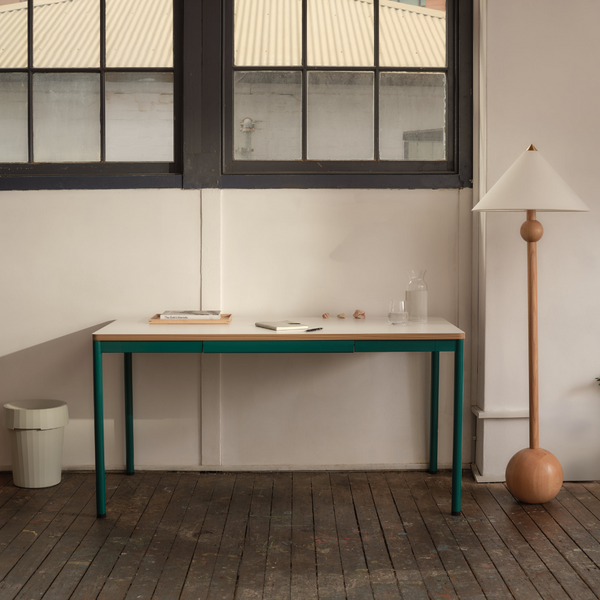
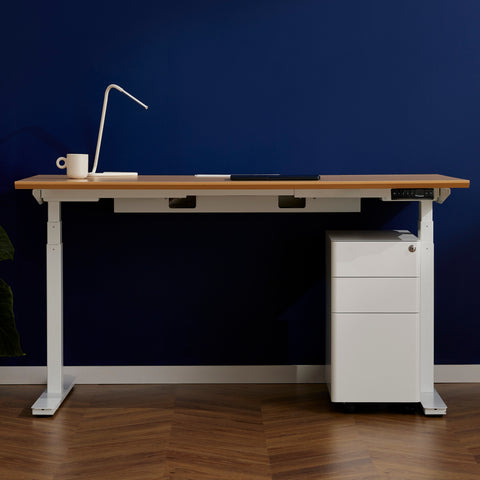
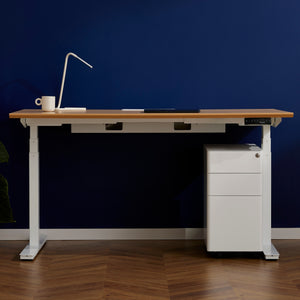
The same thinking goes into our Everyday Desk. It’s made for smaller spaces without cutting corners on durability, because “compact” shouldn’t mean “replace it in three years.”
You can see the fuller picture of how we approach this on our sustainability page, including the specific materials and certifications behind each product, not just a statement of intent.
FAQs about sustainable office furniture
What makes furniture sustainable?
Four things: responsibly sourced materials, real durability, credible certification (like FSC or GECA), and a plan for what happens at end of life: repair, resale, or recycling. A single green feature doesn't make a product sustainable on its own.
How do I choose sustainable office furniture without falling for greenwashing?
Check for specific certifications rather than adjectives, ask about warranty length, and look for disclosed manufacturing details. If a brand can't answer those three questions directly, treat the sustainability claim as marketing rather than fact.
Is second-hand furniture more sustainable than buying new?
Second-hand is one of the most sustainable options going, provided the piece was well-built originally. It avoids new manufacturing entirely. But a poorly made second-hand item is still headed for landfill, just a little later.
Are environmentally friendly office chairs worth the extra cost?
Environmentally friendly chairs tend to be built with better materials and longer warranties, which means fewer replacements over time. The higher upfront cost usually works out cheaper per year of use.
Do recycled materials actually make office furniture greener?
They help, but only when paired with durability. A greener piece of furniture is one where the sourcing, the build quality and the certification all line up, not just the raw material story on its own.
Ready to upgrade your workspace?
Sustainable office furniture worth buying isn't about finding the brand with the most green language on its homepage. It's materials, durability, certification, and honesty about the supply chain. Check the frame before you check the marketing copy, and you'll end up with furniture that's better for your workspace and for the planet, not just better at looking that way.
Got questions about the right setup? Chat with the Recess team, we're here to help you get the setup right.
Author Bio

Will Tungusov is the founder of Recess, a Sydney-based sustainable office furniture startup transforming hybrid workplaces across Australia. Since launching in 2019, Will has led Recess from creating the award-winning Nook soundproof booth to offering a complete range of ergonomic, eco-friendly office solutions. With a focus on eliminating middlemen and prioritising sustainability, Recess has served notable high-growth Australian startups, including Eucalyptus, Lorikeet, Instant One and Tracksuit. Will is passionate about building beautiful, functional workspaces that "don't cost the earth," both environmentally and financially.