








Key Takeaways
- FSC certified furniture means the wood came from a forest independently audited against environmental, social and economic standards, not just a marketer's promise.
- "Eco" and "sustainable" on a product tag are marketing words with no legal definition. FSC certification, by contrast, is issued by an actual organisation you can check.
- Recycled office furniture solves a different problem (waste, not forest management) and the two labels aren't interchangeable.
- Australia has around 11.4 million hectares of certified forest, so locally sourced FSC-certified wood isn't hard to find if you know what to check.
- The real test for any label is simple: can you look it up? If the answer is no, it's decoration, not certification.
You've seen the little tick-tree logo on a desk listing and had no idea what it actually promises. FSC certified furniture, recycled timber, "eco-friendly" materials: three different labels, three different meanings, and most furniture sites use them interchangeably like they're the same thing. They're not. One is an audited certification. One is a manufacturing claim. One is basically vibes.
This guide breaks down what each label certifies, what it doesn't, who actually issues it, and how to verify it in about thirty seconds. No jargon, no guilt trip.
What is FSC certification, actually?
FSC stands for Forest Stewardship Council, an international, non-profit organisation founded in 1993 to promote responsible forest management. It's not a government body and it's not the furniture maker grading its own homework. It's a third party.
When a forest gets FSC certified, an independent auditor has checked it against a set of criteria covering environmental protection, worker rights, and Indigenous and local communities' land rights. The certification travels with the timber through what's called a chain of custody: from log, to mill, to the maker, to the piece of furniture in your home office.
Globally, FSC-certified forests now cover more than 160 million hectares, according to Forest Stewardship Council Australia and New Zealand. In Australia specifically, around 11.4 million hectares of forest have been certified under FSC or the comparable Responsible Wood scheme, according to Forestry Australia. Australia also ranks as the third-largest certified forest area in the world by hectares, according to Responsible Wood.
That's not a small, niche program. It's a genuinely international system with real audits behind it.
FSC certified furniture vs recycled office furniture vs eco labels: the comparison
Here's the table version, because these three labels get lumped together constantly and they're solving completely different problems.
|
Label |
What it certifies |
What it doesn't certify |
Who issues it |
How to verify |
|---|---|---|---|---|
|
FSC certified |
The wood or timber came from a forest managed to environmental, social and economic standards, tracked through the full supply chain |
The final product's durability, design or carbon footprint |
Forest Stewardship Council (independent, international, non-government) |
Look for the FSC licence code (starts with "FSC-C") and check it on the FSC database |
|
Recycled office furniture |
Some or all materials (usually metal, particleboard or plastic) were diverted from waste |
Whether the original material was sustainably sourced in the first place |
No single global body. Varies by manufacturer claim |
Ask the maker for the recycled content percentage in writing |
|
"Eco" / "sustainable" / "green" |
Nothing specific. These are unregulated marketing terms |
Everything, unless backed by a real certification alongside it |
No one. Anyone can print it on a box |
Treat as a headline, not evidence. Look for the certification behind the claim |
What FSC certification doesn't cover
This matters as much as what it does cover. FSC certification tells you about the forest and the supply chain. It says nothing about how the furniture is built, whether it'll survive five years of daily use, or what happens to it at the end of life.
A piece can be FSC-certified and still be badly designed. A wobbly, thin-veneer desk can carry a legitimate FSC label because the certification travelled with the raw timber, not the finished joinery. That's why we'd always pair a materials label with an actual look at the build. Our guide on what to look for in ergonomic office furniture covers the construction side: hinge quality, weight capacity, adjustment range, the stuff a forest certificate can't tell you.

Recycled office furniture: a different kind of responsible
Recycled office furniture usually means the metal frame, plastic components or engineered board contain reclaimed material rather than virgin resource. It's a genuinely useful thing to ask about, especially for chairs and storage, where steel and plastic dominate.
But recycled content and FSC certification aren't measuring the same thing. A recycled-steel chair frame tells you nothing about whether any wood component in that same chair came from a responsibly managed forest. If a brand's product page mentions both, that's worth noting. If it only mentions one, ask about the other.
Eco label meaning: why the green words don't mean much on their own
Here's the uncomfortable bit. Terms like "eco-friendly," "sustainable," and "green" have no enforced legal definition in Australia when printed on a furniture tag. Any business can use them. Most do, because they sound reassuring and cost nothing to print.
The eco label meaning problem isn't that these words are always false. It's that they're unverifiable on their own. A supplier can call a particleboard bookshelf "eco-friendly" because it used slightly less glue, or because they simply felt like writing it. Without a certification number, a supply chain document, or a third-party standard sitting behind the word, it's not information. It's a mood.
Same goes for smaller items: a bar stool labelled "sustainably made" with no certification code attached is telling you nothing you can check. The word "responsibly" works the same way. It should point to a standard, not stand in for one.
Why forest management standards exist in the first place
Forest certification exists because unmanaged logging causes real, measurable damage: habitat loss, reduced biodiversity, and long-term impact on species that depend on old-growth structure. Global forest area sits at roughly 4 billion hectares, and only a fraction of that is under any certified forest management standard, according to the Global Forest Atlas at Yale.
Responsible forest management under FSC's criteria requires forestry operations to protect habitat for sensitive species, respect Indigenous and local communities' rights, and maintain conservation zones inside working forests. It's not just a supply chain checkbox. It's meant to keep a forest functioning as a forest, not just a timber farm, while still allowing the wood industry, plantation workers and local economies to keep operating.
That's the balance FSC tries to strike: a working forest, a functioning economy, and a forest that's still standing and biodiverse in fifty years.
How to actually verify an FSC-certified wood claim
Three checks, in order of usefulness:
- Ask for the FSC licence code. Every genuinely FSC-certified product carries one, and it's checkable through the FSC's public database.
- Look for chain of custody language, not just forest management language. A furniture maker needs both to legitimately claim their finished product is FSC-certified wood, not just the raw log.
- Be sceptical of certification logos with no code attached. A tree icon alone proves nothing.
What should you actually look for?
Skip the marketing words entirely. Look for a named certification (FSC is the most widely recognised worldwide, and the one with the clearest chain of custody system), a checkable code, and a maker who'll tell you exactly where the timber came from without you having to ask twice.
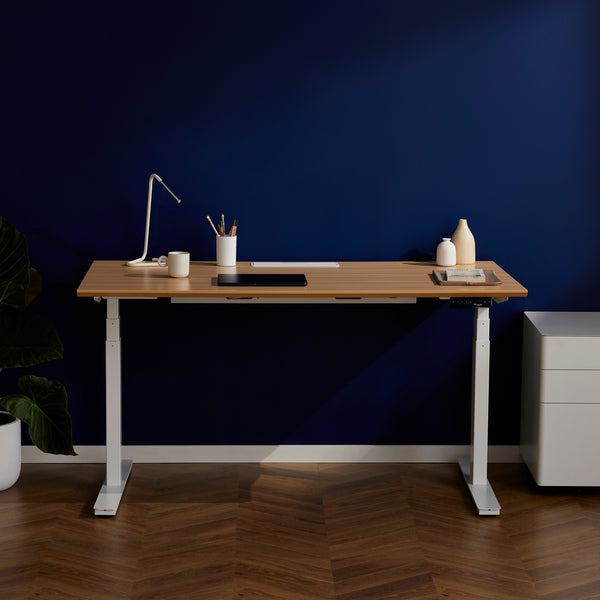
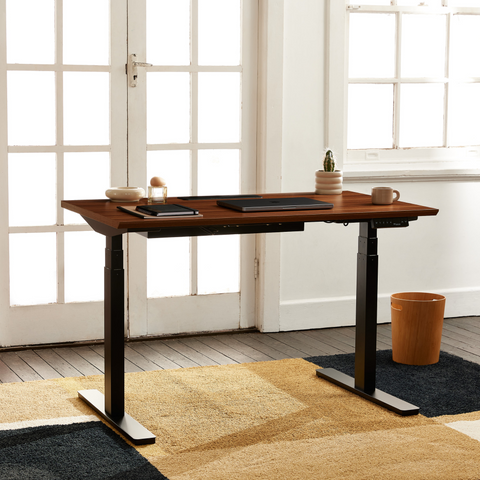
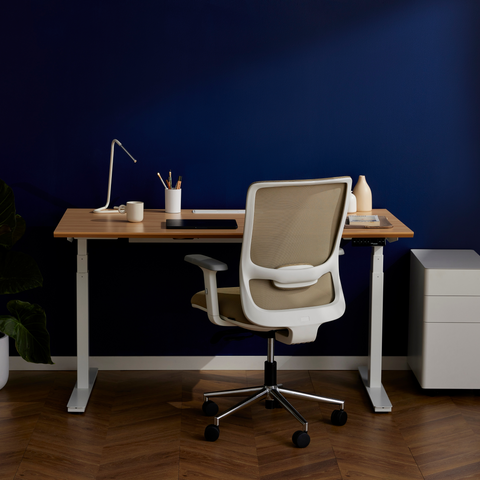
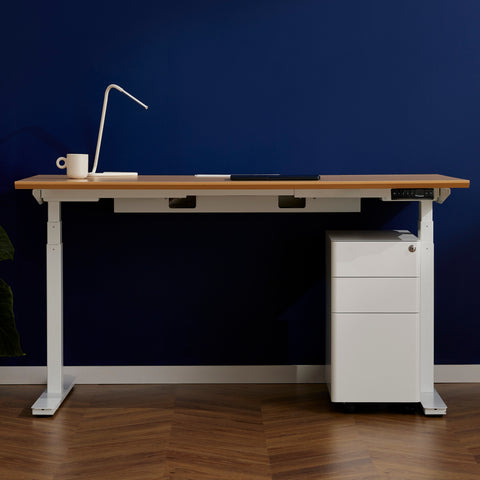
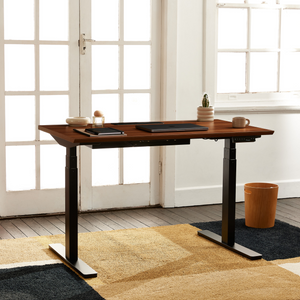
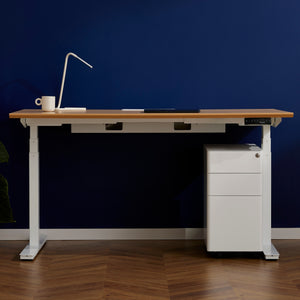
We build our standing desk and everyday desk around solid American oak and FSC-certified wood where the species and supply allow it, and we're upfront about which parts are which. If you're furnishing a home office and want the material story to actually hold up under a Google search, that's the standard worth asking any supplier to meet, Recess included.
You can see how we think about materials more broadly on our sustainability page, where we list what's certified, what's recycled, and what's genuinely still a work in progress. We'd rather say that plainly than print a green tree logo and hope you don't ask.
Frequently asked questions
What is FSC certification in one sentence?
It's independent, third-party verification that timber came from a forest managed to environmental, social and economic standards, tracked from log to finished product.
Is FSC-certified furniture more expensive?
Sometimes, but not always. Cost depends more on timber species, build quality and maker margin than on certification alone. A certified pine desk can cost less than a non-certified oak one.
Does "recycled" mean the same as "FSC certified"?
No. Recycled content refers to reclaimed material, usually metal or board. FSC certification refers to responsibly sourced virgin timber. A product can be one, both, or neither.
Can I trust an "eco-friendly" label with no certification attached?
Treat it as marketing copy until it's backed by a real, checkable standard. That's the honest answer, and it's the one most furniture sites won't give you.
Next time you're comparing desks, don't let a green logo do the convincing for you. Ask for the code, check the chain of custody, and pick furniture from a maker who'll actually show you the paperwork.
Ready to upgrade your workspace?
Got questions about the right setup? Chat with the Recess team, we're here to help you get the setup right.
Author Bio

Will Tungusov is the founder of Recess, a Sydney-based sustainable office furniture startup transforming hybrid workplaces across Australia. Since launching in 2019, Will has led Recess from creating the award-winning Nook soundproof booth to offering a complete range of ergonomic, eco-friendly office solutions. With a focus on eliminating middlemen and prioritising sustainability, Recess has served notable high-growth Australian startups, including Eucalyptus, Lorikeet, Instant One and Tracksuit. Will is passionate about building beautiful, functional workspaces that "don't cost the earth," both environmentally and financially.
Follow Recess: LinkedIn | Facebook | Instagram