







KEY TAKEAWAYS
- A small home office setup works when you plan around square footage first and furniture second: measure the wall and the walking path before you shop.
- Desk depth matters more than desk width in a tight room. Look for desks around 50 to 60cm deep so you keep floor space to walk past.
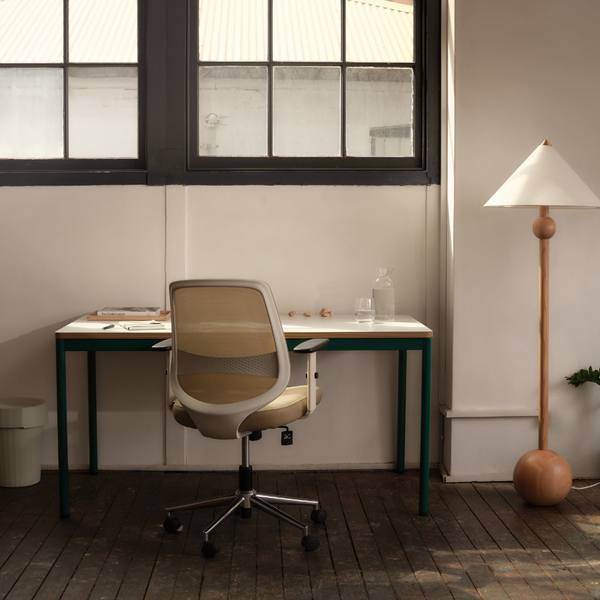
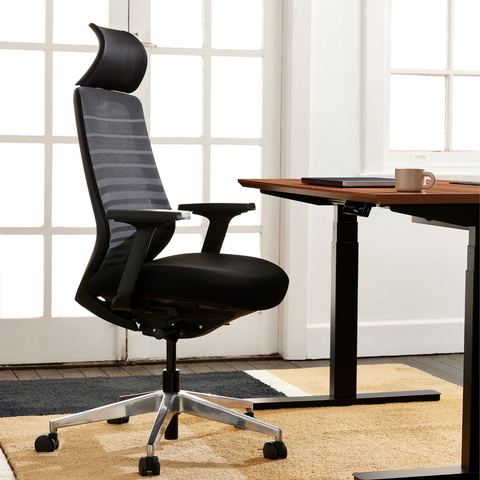
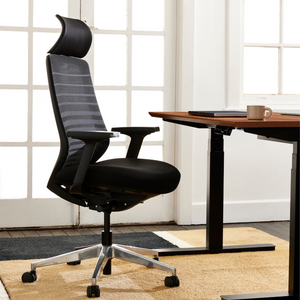
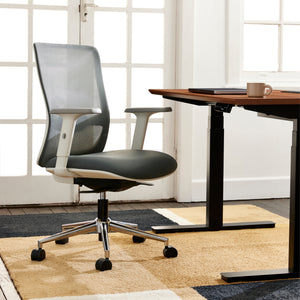
- Don't shrink the chair to save room. A proper office chair like the Ergo Chair earns its footprint because you sit in it for hours a day.
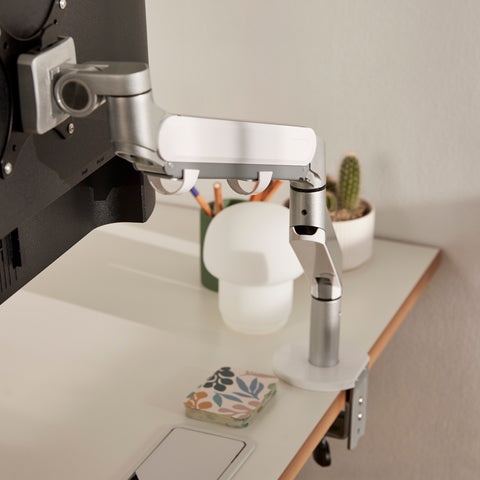
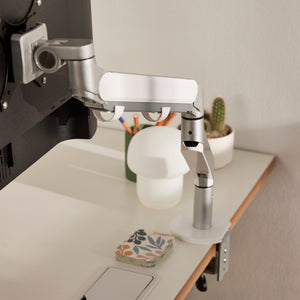
- A monitor arm frees up desk space instantly by lifting your screen off the surface and onto the wall, and using vertical space instead of the desktop.
- Visual separation, a desk screen, a rug, a change in colour, does more for a home office feel than a bigger room ever will.
If your desk is currently wedged between your bed and a wardrobe, you don't need a listicle telling you to "add a plant." You need a small home office setup that works with the room you've actually got, not the one in a mood board. This guide skips the generic advice and gets into what fits, what doesn't, and why, with real design ideas for making a small home office space actually work, whether you're building a stylish home office from scratch or just trying to make a small workspace feel like a proper place to work.
Setting up a home office in a bedroom, a studio apartment, or a lounge corner comes with a specific problem: square footage is fixed, but your work needs (a proper work surface, storage, good lighting, a chair that doesn't wreck your back) aren't optional. The fix isn't fewer things. It's smarter choices about depth, height and what goes on the wall instead of the floor. Good interior design in a tiny home office is really just problem-solving with a tape measure, and it applies just as much to a compact space in a shared house as it does to a spare room.
Start With The Footprint, Not The Wishlist
Your bedroom was not built for a desk. Neither was that awkward nook past the kitchen, or the corner of the living room you've been eyeing off since March.
A small home office setup isn't about pretending the room is bigger than it is. It's about choosing furniture that respects the square footage you actually have, and treating storage solutions and vertical space as essential from the start.
According to the Australian Bureau of Statistics, 36% of employed Australians usually worked from home in August 2025. Most of them aren't working from a spare room with a door that closes, and remote work has made a functional home office space essential rather than optional.
They're working from bedrooms, studio apartments and shared living rooms, fitting a work area into whatever floor space is left over. If you work from home two or three days a week, that work area needs to earn its keep every single day, not just look good in a photo. Productivity in a compact space comes down to how well the essentials are planned, not how much room you have.
Before you look at a single desk, measure the wall you're planning to use. Write down the width and depth in centimetres: this is the number that rules out entire categories of furniture before you fall in love with something that will never fit.
Measure the walking path too. You need roughly 60 to 70cm of floor space to pull a chair out and stand up without clipping a wall or a bed frame.
Instead of asking what desk you want, ask what footprint the wall can actually give you without eating into the rest of the room. That single shift defines the space and makes every decision after it faster, and it's the foundation of good design ideas for any tiny home office.
Where a small home office setup actually goes in your home
Most small home office setups in Australia land in one of five spots: a bedroom corner, a studio apartment, a closet, a hallway nook, or a shared living room.
Each one comes with its own trade-offs, and none of them need a full renovation to work. These are some of the most useful ideas for small spaces because they don't rely on extra square footage, just smarter decor ideas and better use of what's already there.

Home office in a bedroom
A home office in a bedroom is the most common version of this problem, and the trickiest. You're trying to build a workstation in the same room you sleep in, without the desk taking over the vibe of the room.
The fix is usually positioning, not size. Put the desk against a wall you don't see from the bed, ideally facing a window rather than the mattress.
That way, when you close the laptop, the room reads as a bedroom again, not an office with a bed shoved in the corner.
Studio apartment workspace
A studio apartment workspace has to share air with your kitchen, your living room and your bed, often all in the same sightline. Here, a slim desk against a single wall works harder than a bulky corner unit ever will, which is the whole point of minimalism in a compact home.
Look for a desk under 120cm wide if the studio apartment is genuinely tiny. It should be able to hold a laptop, a coffee cup and not much else, because that's honestly all a small workspace has room for.
Closet office and other small office ideas
A closet office sounds extreme until you've tried it: pull the doors off (or leave one open), add a slim desk and a floating shelf, and you've got a work area that disappears behind a door at 6pm.
Some of the best small office ideas involve rooms nobody thinks of as an office at all. A laundry room with a fold-down bench, a guest room that only hosts visitors twice a year, or a wide hallway nook can all become a home office nook with the right compact desk.
Living room and shared spaces
If the living room is your only option, treat the desk like a piece of furniture, not a workstation bolted into the corner. A desk with a timber finish and simple lines will sit in a living room the same way a console table would, and it won't fight the rest of the interior design.
Choosing a desk for a small space
The desk is the one piece of home office furniture for small spaces you can't compromise on, because everything else, your chair, your screen, your storage, is built around it.
Desk depth matters more than desk width
Most people shopping for a small desk fixate on width and ignore depth, which is backwards. A desk that's 140cm wide but only 50cm deep will fit a tight wall far better than a 100cm wide desk that's 70cm deep.
As a rule of thumb, aim for a work surface between 50 and 60cm deep. That's enough room for a laptop and a notebook, without the desk eating into your walking path.
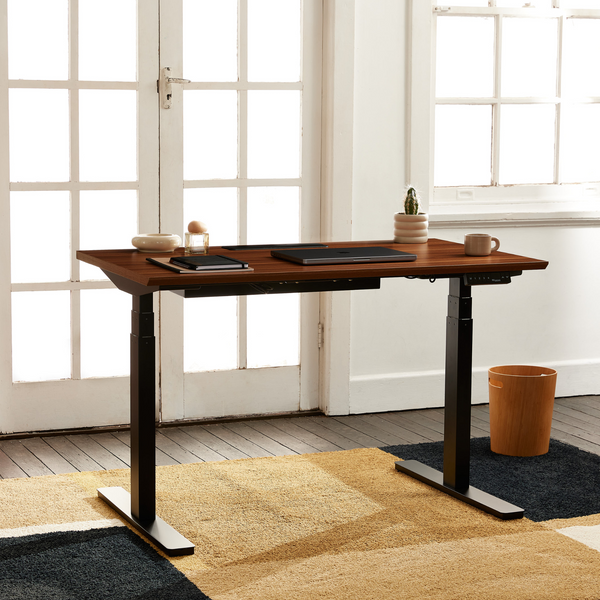
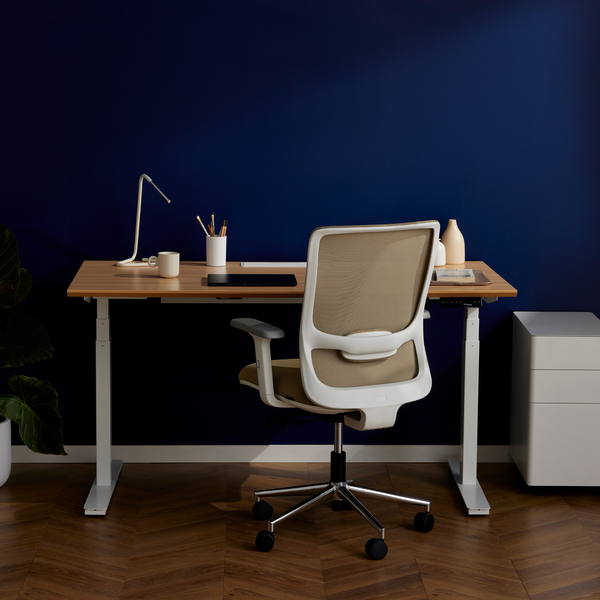
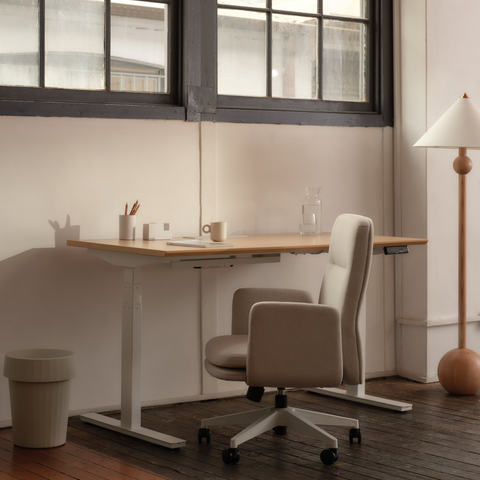
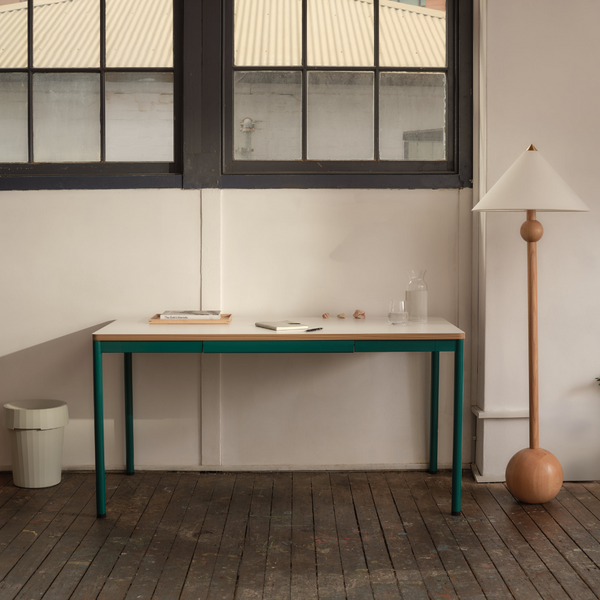
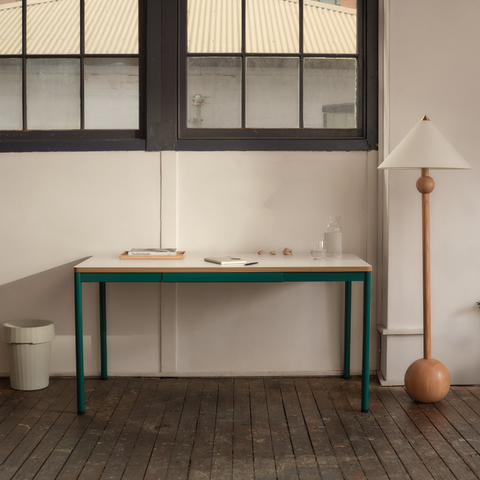
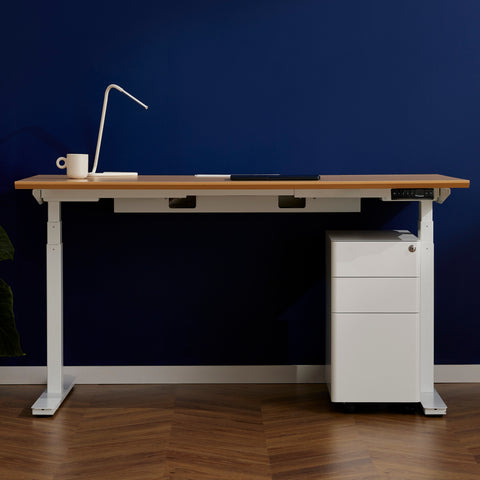
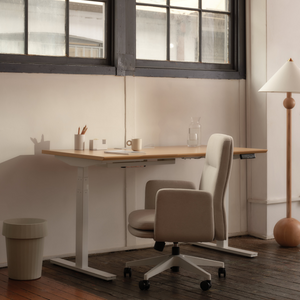
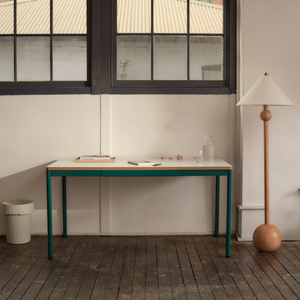
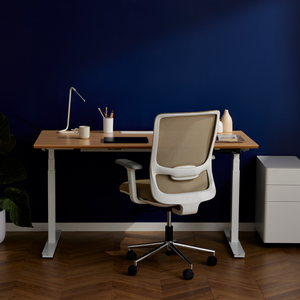
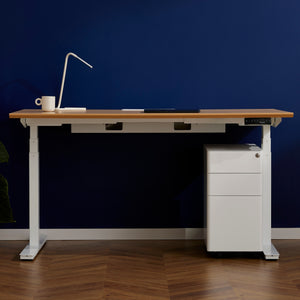
The Everyday Desk sits in that range, which is why it works in bedroom corners and studio apartment workspaces where every centimetre of wall space counts.
Should a small desk fold away?
Foldaway and wall-mounted desks are worth considering if the room genuinely needs to switch functions, a guest room by day, a work area by night. But for most people working from home three or more days a week, a fixed desk gets used more consistently, because there's no friction to setting up.
Nobody sits down to write an email if it means unfolding a desk first.

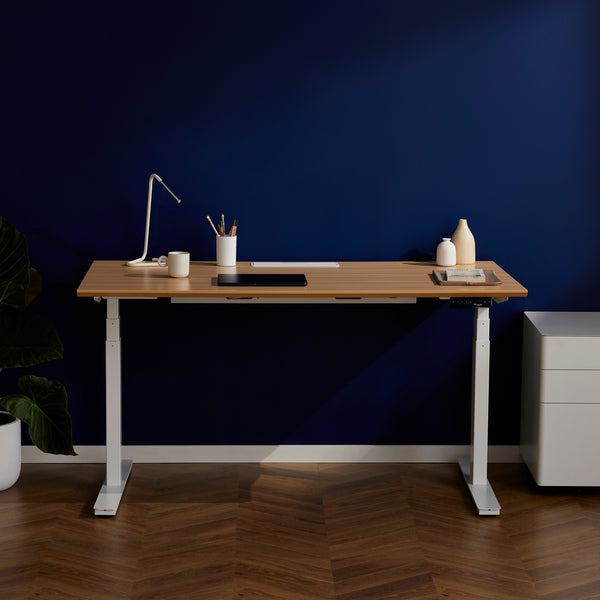
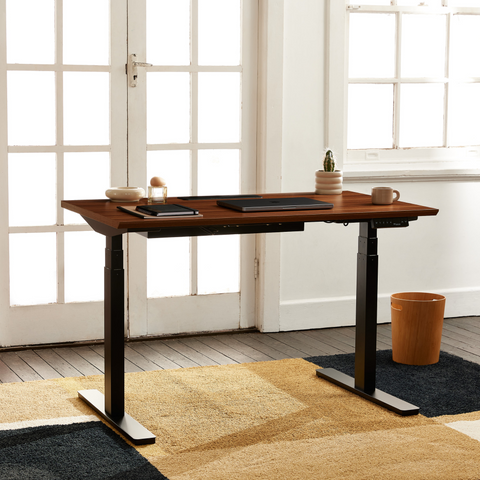
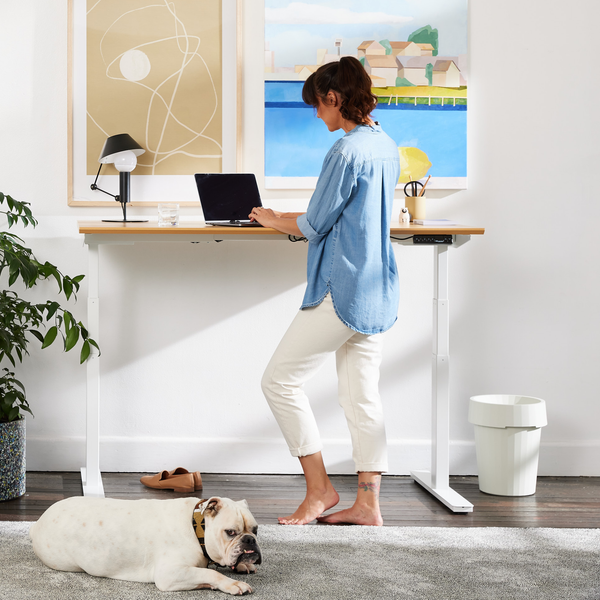
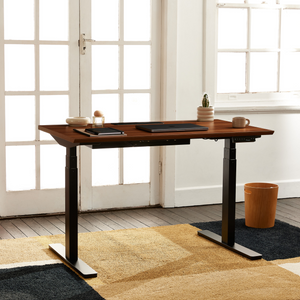
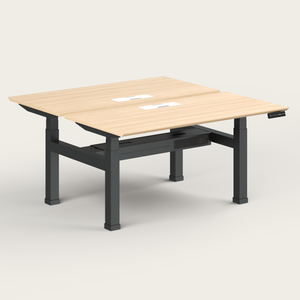
The Standing Desk has a footprint close to a standard fixed desk, so you're not trading floor space for the ability to stand for an hour in the afternoon. If you want the detail on why standing periodically actually matters, Recess has a full standing desk ergonomics guide worth reading before you decide.
Why the chair is the last thing to shrink
When space is at a premium, the chair is usually the first thing people try to downsize. It's the wrong place to save room.
You'll sit in that chair for six, seven, eight hours a day. A dining chair or a stool might look neater in a small bedroom, but your back will send you the bill within a fortnight.
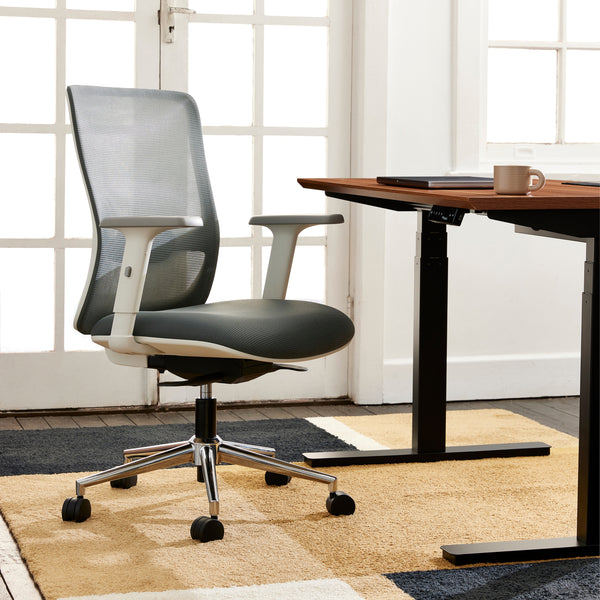
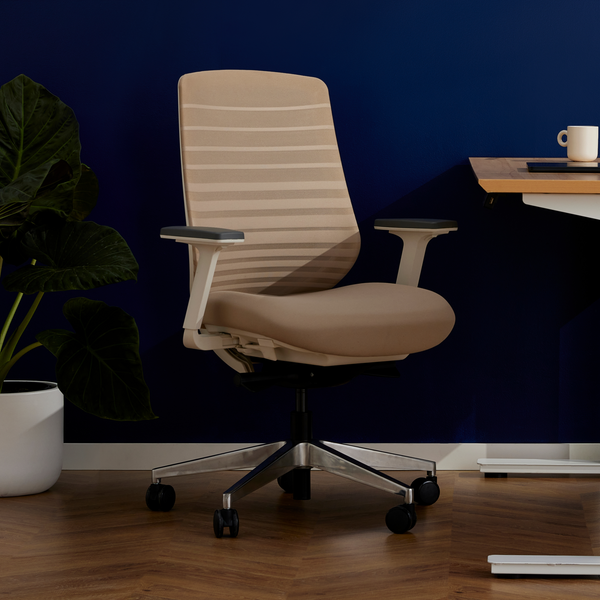
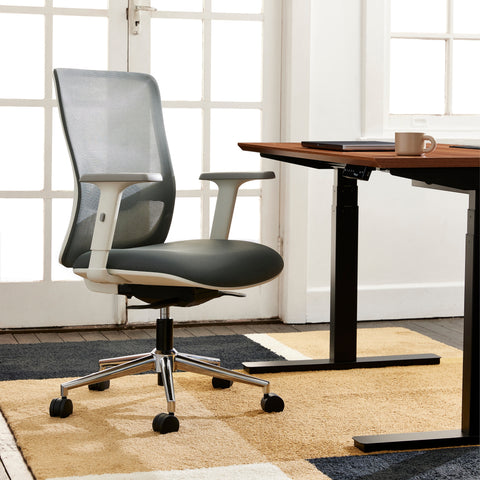
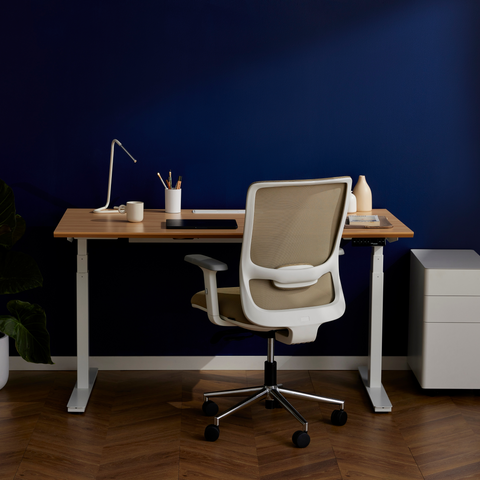
An office chair with proper lumbar support and adjustable height doesn't need to be enormous to do its job. The Ergo Chair is built with a compact base that suits tighter rooms, without cutting the adjustability that keeps your posture in check during a long day.
If you're still weighing up your options, Recess has put together a detailed breakdown of what makes the best office chair for working from home, including how much clearance a chair actually needs around a desk and office chair pairing in a small room.
Ergonomics isn't a luxury add-on for a small home office. It's the difference between a workspace that supports a full workday and one that quietly wrecks your shoulders by Thursday, and it's just as essential for productivity as any desk or chair choice you make.
Give your desk back some room with a monitor arm
If your desk space disappears the moment you put a monitor on it, the monitor is the problem, not the desk.
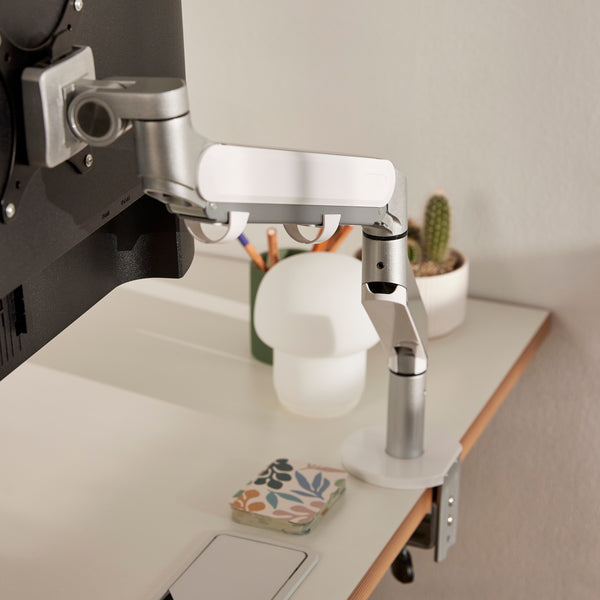
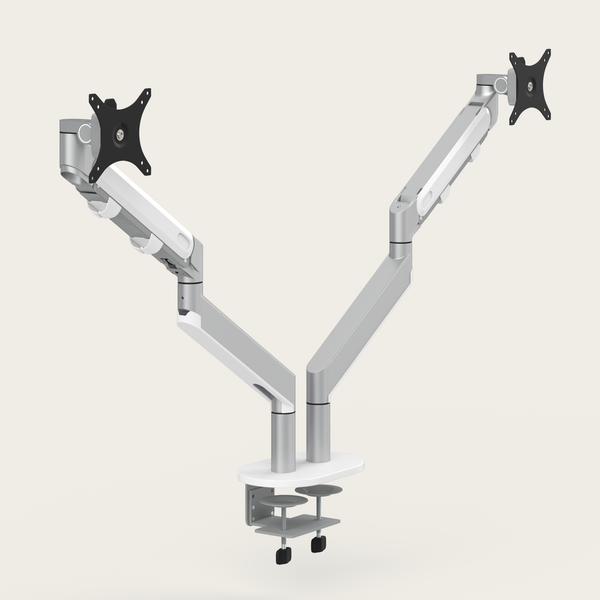
A monitor stand takes up a rectangle of desk space that never moves. A monitor arm clamps to the back edge of the desk and lifts the screen into the air, freeing up the whole work surface underneath for a notebook, a coffee cup or simply nothing at all.
It also lets you push the screen further back or higher, which matters in a small room where your face often ends up closer to the monitor than ergonomics would recommend. The Monitor Arm is one of the easiest upgrades for a compact desk, because it solves a space problem and a posture problem with the same bracket.
Use the wall when the floor runs out
Once the floor space is spoken for, the wall is where you find the rest of your storage. Making the most of vertical space is one of the simplest ways to maximize your space without touching the floor plan.
A floating shelf above the desk holds books, a plant, or a stack of office supplies without touching the floor at all. Wall-mounted cabinetry does the same job for anything you'd rather not see, chargers, cables, the loose stationery that multiplies on its own.
Built-in storage is worth the extra planning if you're renting long-term or own the place outright. A single run of built-in shelving above or beside the desk can hold as much as a freestanding bookcase while using none of the walking path in front of it.
If built-in isn't an option, a desk with at least one drawer is the next best thing. A drawer keeps the desktop clear of anything that isn't actively in use, which matters more in a small home office than in a spare room where clutter can spread out and hide.
Light does more work than square metres
Natural light changes how big a room feels more than any piece of furniture will. A desk positioned side-on to a window, rather than facing it directly, cuts screen glare while still giving you daylight on the work surface.
If your only wall doesn't get natural light, home office lighting has to compensate. A single warm desk lamp reads as considered; an overhead bulb left on all day reads as a room that gives up on itself by 4pm.
A bright home office doesn't need a bigger window. It needs light aimed at the right height, and a lamp that doesn't compete with your monitor for your eyes' attention.
Keep clutter out of the room you sleep in
Clutter is the fastest way to make a small home office feel smaller than it is, and it's the easiest thing to fix.
Every home office setup needs a landing spot for cables, chargers and paperwork that isn't the desktop. A drawer, a small tray, or a shallow basket on a floating shelf all work.
The goal isn't a spotless desk for its own sake. It's making sure that when you finish work, the rest of the room, your bed, your living space, your evening, doesn't have to look at your job.
Building a small home office setup that actually holds up
A small home office setup isn't a compromise you settle for until you move somewhere bigger. Done properly, with a desk that fits the wall, a chair that supports a full day, and storage that uses the wall instead of the floor, it can outperform a spare room that's full of furniture nobody thought through.
Start with the wall you've got. Measure it, pick a desk that respects the depth, add a proper chair, and let the rest of the room stay a bedroom, a living room or a studio, not a home office that swallowed it whole. Whether you're after a modern home office with a splash of colour or a quiet, minimalist corner, the same principles hold.
If you want the fuller version of this thinking applied to any home office, not just small ones, Recess has a guide on how to build the perfect home office that's worth bookmarking for when your space changes.
Frequently asked questions about a small home office setup
What's the best small home office idea if I only have one wall?
Pick a slim desk no deeper than 60cm, mount a shelf above it, and add a monitor arm. That combination covers most home office setup essentials without needing a second wall or a corner.
How do I create a home office in a studio apartment?
Choose one wall away from the kitchen and bed, use a desk under 120cm wide, and add a desk screen or room divider so the work area reads as separate from the rest of the studio apartment.
Can a closet actually work as a home office?
Yes. A closet office with the doors removed, a compact desk and a floating shelf can hold a full desk setup in less space than most people assume, and it closes off completely at the end of the day if you leave one door on a hinge.
What if I'm short on space entirely, like a shared living room?
Treat the desk as a piece of furniture that matches the rest of the room. A simple, well-made desk with a room divider or desk screen behind it can sit in a family home's living room without looking like an office invaded it.
Do I need a standing desk in a small room?
Not always, but a single-motor sit-stand desk gives you two working positions in the footprint of one desk, which is a genuinely useful trade-off in a small home office where you can't fit a separate standing station.
Ready to build a small home office setup that fits?
A small home office setup comes down to a few decisions made in the right order: measure the wall first, choose a desk that respects the depth, keep the chair that supports a full day, and send your storage up the wall instead of across the floor. Get those right and the room stays a bedroom, a studio or a living room that also happens to work hard.
If you're not sure which desk depth or which chair suits the space you're working with, talk to the Recess team and we'll help you match the setup to the room you've actually got.
We're here to help you build a workspace that fits the space, rather than one that takes it over.
Author Bio

Will Tungusov is the founder of Recess, a Sydney-based sustainable office furniture startup transforming hybrid workplaces across Australia. Since launching in 2019, Will has led Recess from creating the award-winning Nook soundproof booth to offering a complete range of ergonomic, eco-friendly office solutions. With a focus on eliminating middlemen and prioritising sustainability, Recess has served notable high-growth Australian startups, including Eucalyptus, Lorikeet, Instant One and Tracksuit. Will is passionate about building beautiful, functional workspaces that "don't cost the earth," both environmentally and financially.
Follow Recess: LinkedIn | Facebook | Instagram