








Let’s face it, sometimes office noise drives you up the wall. Whether it’s the chatty coworkers, clicking keyboards, AC, and even street noise, these can all pile up into one constant distraction, especially when you’re trying to focus (or worse, when you’re in a virtual meeting). Luckily, this is a problem you can actually solve. Soundproofing an office is all about controlling how sound enters, leaves, and moves around the space. In this guide, you’ll discover practical ways to tame the noise in your office by tweaking your office layout, choosing the right materials, and adding some smart acoustic solutions.
Key Takeaways
-
Office soundproofing works best when combining blocking, absorbing, and isolating sound.
-
Simple changes like sealing gaps, adding soft surfaces, and adjusting layouts can reduce office noise quickly.
-
Acoustic treatments help control echo and speech noise in open areas.
-
Enclosed acoustic solutions, such as soundproof booths, can create private zones when open spaces remain noisy.
-
The right solution depends on your office size, noise sources, budget, and flexibility needs.
How Sound Travels in an Office
Sound moves through air as waves. In offices, it spreads in three main ways:
-
Through gaps and openings — doors, windows, vents, and wall cracks allow sound to travel through.
-
By reflection — hard surfaces like glass, concrete, and office furniture bounce sound, creating echo.
-
Through structures — walls, floors, and ceilings transmit vibration from one area to another.
Typical office noise includes conversations, calls, keyboard typing, equipment buzz, and outside sounds such as traffic. Better soundproofing tackles all these pathways instead of hoping one solution fixes everything.
Practical Ways to Soundproof an Office
These foundational strategies work in most office settings.
1. Seal Gaps and Air Leaks
Small openings allow surprising amounts of sound to pass through.
-
Use weatherstripping around doors
-
Add door sweeps
-
Seal cracks with acoustic sealant
-
Line or close unused vents
This simple step makes conversations more private and keeps outside noise where it belongs – outside.
2. Add Soft, Sound-Absorbing Materials
Soft materials reduce echo and reflected noise.
-
Install carpets or large rugs
-
Use upholstered furniture
-
Add curtains to glass areas
-
Mount acoustic wall panels for offices
These surfaces act as natural sound absorbers, reducing mid- to high-frequency sounds like voices and typing, which can significantly boost focus and task accuracy.
Research shows that workspaces with well‑implemented acoustic treatments reported up to a 20 - 30 % improvement in employee focus and task accuracy compared to untreated environments.
3. Treat Ceilings and Large Surfaces
Ceilings and long walls often reflect the most sound.
-
Install acoustic ceiling tiles
-
Use suspended baffles
-
Place panels near workstations
These changes help control that echoey feeling and bring down the overall office noise level.
4. Rearrange the Layout
How an office is arranged influences how sound travels.
-
Position noisy equipment away from desks
-
Separate collaboration zones from focus areas
-
Use shelves, planters, or dividers as soundproof barriers
Even small layout adjustments can make a noticeable difference in office noise reduction.
5. Use Sound Masking
Sound masking introduces a consistent, low-level background sound that makes conversations less distracting.
-
White noise systems
-
Balanced ambient sound via HVAC systems
Masking doesn't block noise, but it makes conversations blend into the background instead of standing out.
At the Australian Acoustical Society 2025 conference, researchers shared how Perth offices are benefiting from sound masking systems. They help with conversation privacy, reduce distracting noises, and add just the right amount of background sound to open-plan work environments.
Enclosed Acoustic Spaces in Offices
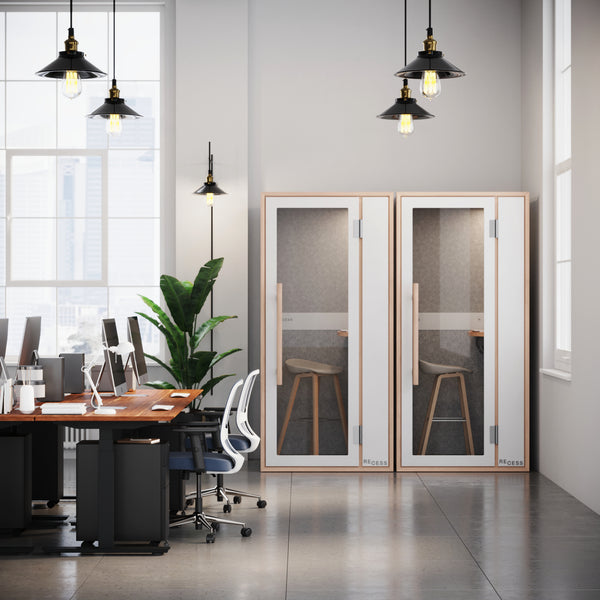
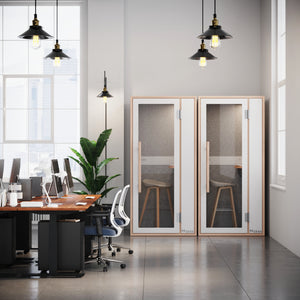
However, sometimes, all those surface treatments just aren't enough, especially when you need real privacy for calls, sensitive discussions, or deep focus work. That's where enclosed acoustic furniture and booths come in handy. They create a space of quiet by containing sound within their walls.
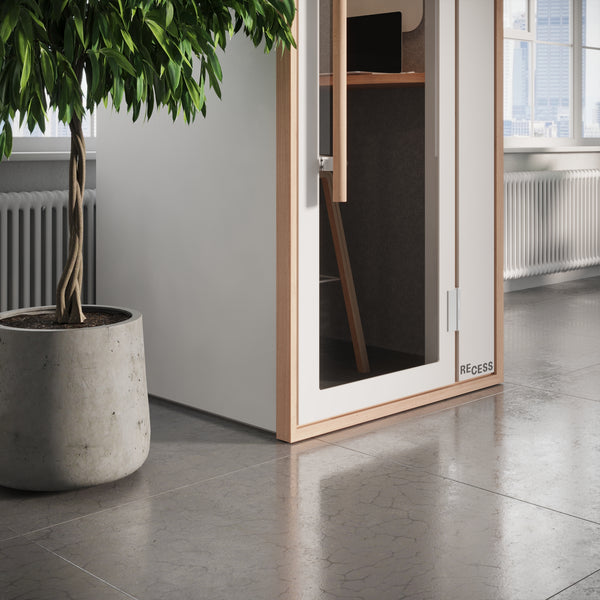
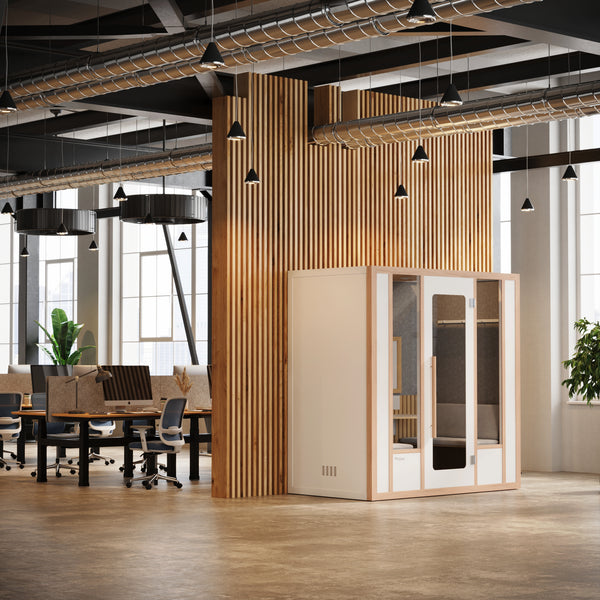
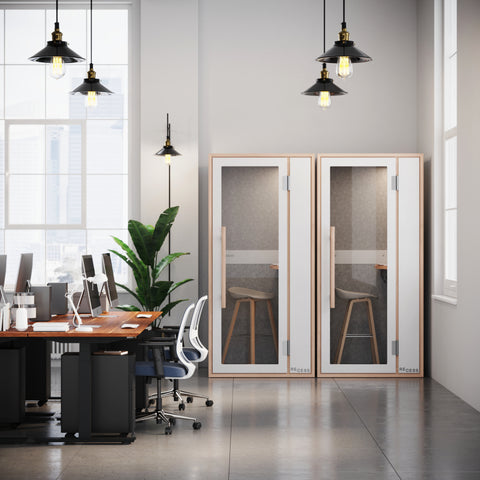
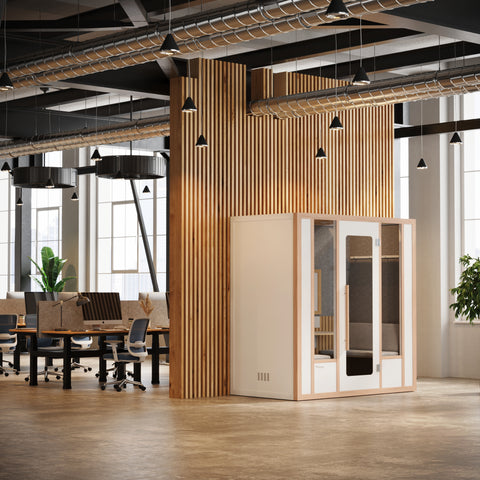
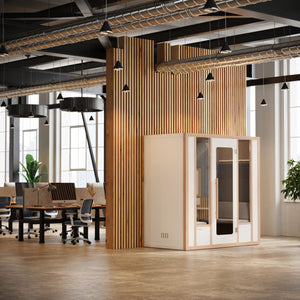
Modern acoustic pods for work are designed to absorb sound waves, with noise-absorbing interior panels and sealed doors that really cut down on sound transfer. They’re often used in open offices because they give you quiet zones without the hassle of building actual rooms.
For growing teams, it’s also worth thinking beyond a single pod. Many workplaces roll out multiple booths at once to create a network of quiet zones across the floor. Recess designs booths to work as a cohesive system, so outfitting larger spaces stays consistent in look, feel, and acoustic performance without the complexity of a full renovation.
You can find examples of these setups in the Recess soundproof booths collection.
And since they solve particular noise problems that are challenging to control in open offices, modular soundproof booths are beneficial. They designate specific spaces for activities that produce the most noise or need the most privacy rather than attempting to make the entire area quiet.
If you want to learn more about how office pods improve privacy and help reduce noise at work, check out this complete guide to office pods in Australia.
Quiet Booths for Private Calls and Video Meetings
One of the main noise issues in shared offices can be phone and video calls. Background noise can make calls difficult to hear and compromise privacy, while conversations are easily carried over. A small office booth, like the Nook soundproof booth offers a calm, regulated area where distractions are reduced and sound is absorbed.
For calls, online meetings, or brief, concentrated tasks, single-person booths are perfect. They provide a place for workers to leave the open office without requiring a permanent space.
Soundproof Pods for Small Meetings
Open desks aren't the best for private conversations, but not every discussion requires a full boardroom. Teams can converse in enclosed spaces like small meeting booths without disturbing or being overheard.
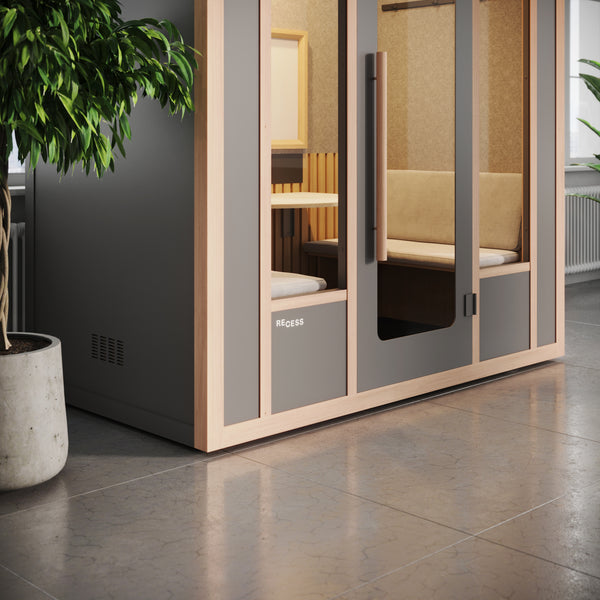
Options with larger enclosures, like the Cove soundproof booth are frequently utilized for small team catch-ups, interviews, and one-on-one meetings. They facilitate teamwork while maintaining effective sound control, which is particularly helpful in different types of noise situations in open-plan arrangements.
Using Acoustic Work Pods to Enhance Your Office’s Noise Control
Soundproof booths work best as part of a bigger plan to manage office noise. They’re not meant to replace other acoustic improvements, but they do solve a key issue: creating enclosed spaces where sound and distractions are kept under control.
When thinking about how to soundproof an office, it helps to approach it in layers:
-
Absorb sound with furnishings and panels: Use soft furniture, rugs, and acoustic panels to reduce noise bouncing around the room.
-
Plan your layout carefully: Position desks and work zones to minimise how sound travels across the office.
-
Mask background noise: Gentle ambient noise can make chatter and distractions less noticeable.
-
Use enclosed spaces for focus: Booths or pods give employees a quiet spot for calls, meetings, or tasks that need concentration.
Comparing Office Soundproofing Options
Each solution tackles different noise problems, which is why mixing and matching usually gives you the best results.
|
Solution |
Best For |
Noise Reduction |
Installation |
Flexibility |
|
Sealing gaps |
Reducing leakage |
Low–Moderate |
Easy |
Permanent |
|
Acoustic panels |
Echo control |
Moderate |
Easy–Medium |
Semi-permanent |
|
Soft furnishings |
General noise softening |
Low–Moderate |
Easy |
Flexible |
|
Ceiling treatments |
Large open spaces |
Moderate |
Medium |
Semi-permanent |
|
Soundproof booths |
Speech privacy |
High |
No construction |
Flexible |
Tips for Choosing the Right Soundproofing Approach
Office size and layout — larger spaces may need distributed treatments and quiet rooms.
Noise type — speech-heavy environments benefit from absorption plus enclosed spaces.
Budget — soft materials are affordable; enclosed acoustic solutions are a larger investment.
Flexibility — leased spaces benefit from movable solutions.
Design — acoustic solutions can be integrated into the visual design of the workspace.
Conclusion
Soundproofing an office involves managing how sound enters, reflects, and spreads. Sealing gaps, adding soft materials, and adjusting layouts create immediate improvements. Acoustic panels and ceiling treatments further control noise levels. Enclosed acoustic spaces can offer an extra degree of control in offices that require more privacy for calls or concentrated work.
A balanced combination of these strategies supports better focus, clearer communication, and a more comfortable working environment.
Upgrade Your Workspace with Recess
Looking for better office comfort and productivity? You'll love the premium ergonomic furniture and soundproof office booths from Recess. Explore a collection of sustainably crafted desks, chairs, and acoustic pods that are designed to create healthier, happier workspaces that scale with your growing team.
Everything's Australian-designed with fast delivery and a lifetime warranty. Recess helps businesses of all sizes build workspaces that are not just functional, but genuinely more inspiring. Ready to transform your office? Visit Recess or contact our team for smarter workspace solutions.
Author Bio

Will Tungusov is the founder of Recess, a Sydney-based sustainable office furniture startup transforming hybrid workplaces across Australia. Since launching in 2019, Will has led Recess from creating the award-winning Nook soundproof booth to offering a complete range of ergonomic, eco-friendly office solutions. With a focus on eliminating middlemen and prioritising sustainability, Recess has served notable high growth Australian startups including Eucalyptus, Lorikeet, Instant One and Tracksuit. Will is passionate about building beautiful, functional workspaces that "don't cost the earth," both environmentally and financially.
Follow Recess: LinkedIn | Facebook | Instagram