







Australian offices are getting louder. As hybrid return-to-office setups have become the norm across most industries, open-plan floors are filling up again, and the noise is back with them.
But it’s more than just a nuisance. A Bond University study found that open-plan office noise lifts negative mood by 25% and physiological stress by 34% after just minutes of exposure.
The challenge is that open-plan offices are here to stay. They're collaborative, cost-effective, and flexible. However, most Australian businesses aren't about to knock down walls just to solve a noise problem.
What Australian businesses need is something in between: a dedicated, private space that can be dropped into an existing floor without construction, approvals, or months of disruption.
That's exactly what soundproof pods for offices were made for. If you're not sure where to start, this guide covers everything Australian buyers need to know from what these pods are and what types are available to what to look out for before signing off on a purchase.
What Are Soundproof Office Pods?
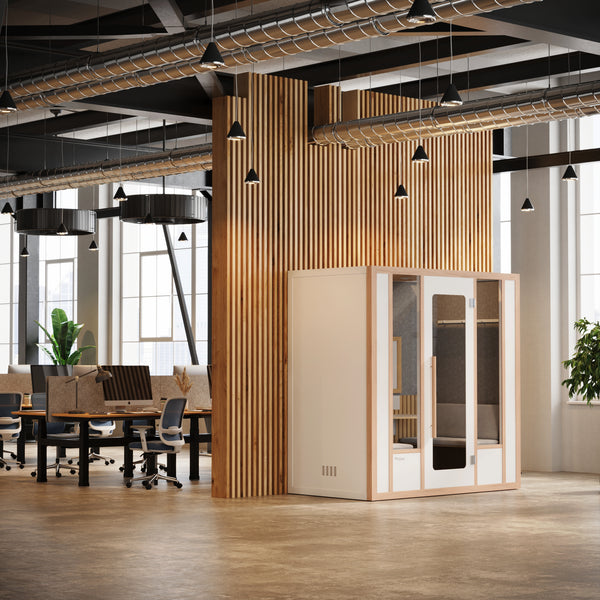
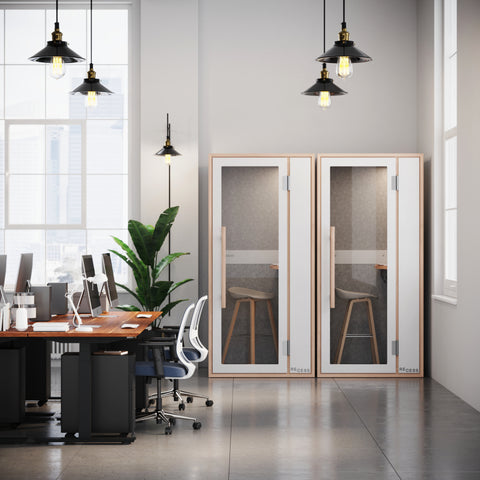
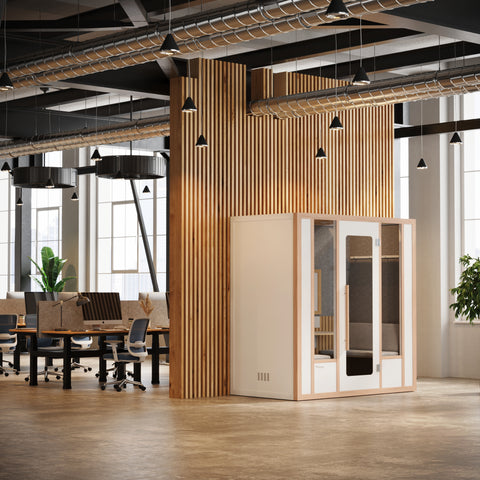
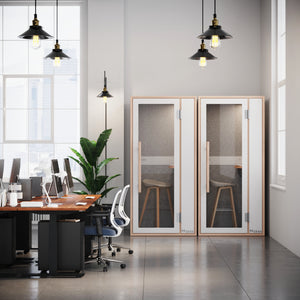
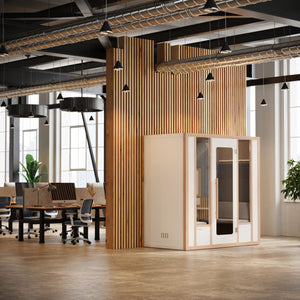
A soundproof office pod is a self-contained, freestanding acoustic enclosure designed to sit within an open-plan workplace.
They're not permanent structures, so no walls need to come down, no builder needs to be called, and no council approvals are typically required.
Here’s how they differ from other acoustic solutions:
-
Acoustic panels — passive and partial. They soften a room but don't create genuine privacy.
-
Traditional meeting rooms — offer similar privacy but require permanent construction, significant investment, and a fixed location.
Most pods fall into two categories, each solving a slightly different problem:
-
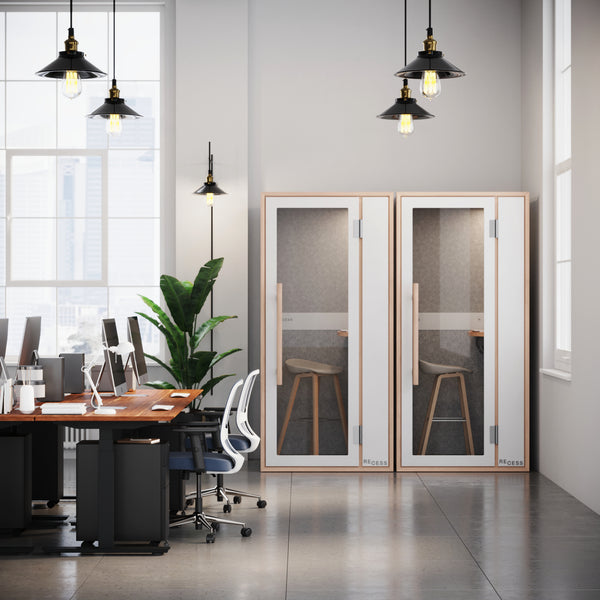
Single-person pods — ideal for calls and focused, heads-down work.
-
Meeting pods — built for teams of four or more.
The right mix depends on how your team actually works.
In terms of employee productivity, a 2025 Spanish study published in the journal Buildings found that working in these pods may increase brain performance.
The result showed that brain activity linked to mental fatigue climbed steadily in the open-plan setting and decreased inside the pod. This means that the brain has to work harder to filter distractions and maintain performance in the open office setting.
Types of Soundproof Pods — Which Do You Need?
-
Single-Person / Phone Booth Pods
These are the most common starting points for Australian offices.
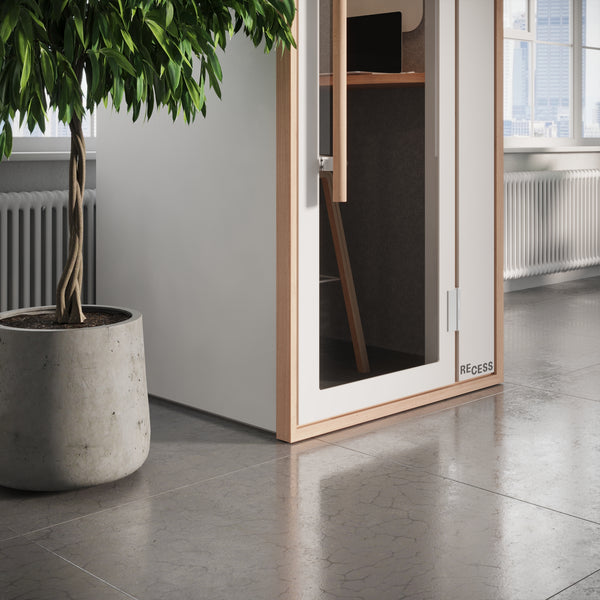
Compact in footprint, they're well-suited to hotdesking environments where employees need a predictable, quiet space for video calls, focused deep work, or a confidential conversation.
They’re also often called soundproof office phone booths or soundproof telephone booths.
-
Meeting Pods (2–4 Persons)
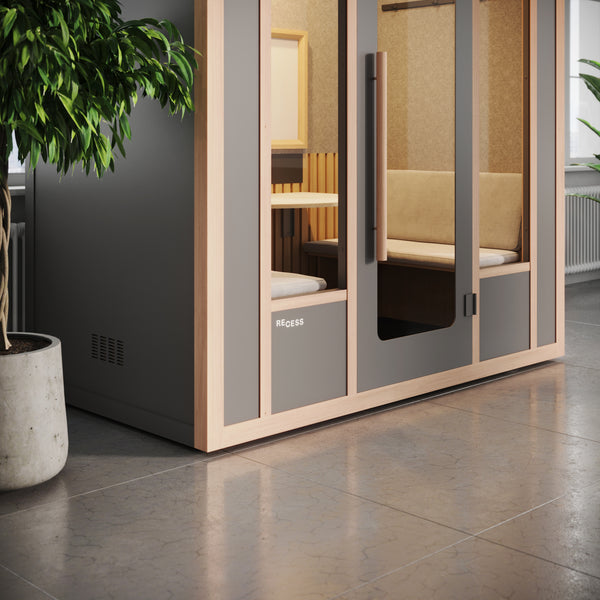
These function as enclosed meeting rooms without any of the construction.
They're particularly useful for offices that are running short on bookable rooms, or for teams that need a semi-private space for collaborative work rather than a full boardroom setup.
When planning to purchase pods, it's tempting to focus on the biggest, most obvious need, which may be the team meeting or the all-hands call.
In practice, however, the most frequent daily need is often the individual one: the client call, the recurring one-on-one, the focus session that keeps getting derailed by floor noise.
Given that, a mix of single-person and meeting pods might serve most offices better than a single large solution.
For a deeper look at how workplace privacy needs have evolved, our complete 2025 guide to workplace privacy solutions is worth a read before you finalise your decision.
What to Look For When Buying — Key Buying Criteria
The pod market has expanded rapidly in recent years, which means more choice but also more noise, figuratively speaking. Some products are genuinely well-engineered, while others make bold claims without the specs to back them up.
Here's what separates one from the other.
|
Buying Factor |
What to Look For |
Red Flags |
|
Acoustic Rating (dB reduction) |
30dB+ reduction for phone calls and focused work; 40dB+ for confidential conversations |
No tested acoustic spec listed; vague claims like 'noise-reducing' with no number attached |
|
Size & Occupancy |
Single-person: ~1.0m x 1.0m minimum footprint; Multi-person: enough room to seat occupants comfortably without crowding |
Cramped dimensions with no clear occupancy rating; no internal measurements listed |
|
Ventilation |
Active, powered air circulation included ; ideally motion-sensor activated |
Passive vents only ; uncomfortable within minutes, particularly in warmer Australian offices |
|
Assembly & Install |
Minimal-tool and short time assembly; fits through a standard door |
Requires permanent fixing, specialist installer, or building approvals |
|
Lead Time (AU) |
Local stock or 2–6 week delivery from an Australian warehouse |
12+ week international lead times with no local support |
|
Warranty & Support |
Minimum 2-year product warranty with AU-based after-sales support |
Warranty serviced through overseas supplier only; no local point of contact |
Before requesting a quote from any supplier, run through these criteria and ask for documented answers to each one. A reputable supplier should be able to provide tested specs, local delivery timelines, and warranty terms without hesitation.
If you're met with vague answers or redirected to marketing material, that tells you something too.
How Many Pods Does Your Office Need?
There's no universal formula for pod numbers. It depends largely on your team's roles and working patterns. For instance, a sales floor running back-to-back calls has very different needs from a design studio where deep, heads-down work is the norm.
It's also worth thinking beyond headcount.
Consider when demand peaks in your office, such as when most calls and check-ins are concentrated and whether pods are supplementing or partly replacing bookable meeting rooms.
Hybrid attendance patterns matter too. A team that's only 60% in the office on any given day has different pod needs than one running at full capacity every day.
The best advice is to start with one or two pods, track utilisation for a month, then scale from there.
For more details on sizing and configuration options, our guide on everything you need to know about soundproof booths may help paint a clearer picture.
Soundproof Pods for Australian Offices — What's Different
Buying a pod in Australia involves a few considerations that aren’t always featured in international buying guides. This includes:
Compliance and Ventilation
The National Construction Code (NCC) requires that any space occupied by a person, including offices and workrooms, be adequately ventilated.
Because soundproof office booths are fully sealed by design, they can't draw on the natural airflow of the surrounding office to meet this requirement. That makes active, powered ventilation a practical necessity rather than an optional extra.
Before purchasing, verify that any pod you're considering includes a built-in powered ventilation system. Passive vents alone won't cut it.
Lead Times
Lead times for office pods in Australia vary significantly depending on the supplier. Some products are stocked locally and can be delivered within days; others are manufactured to order and may involve waits of 8–12 weeks or more.
If you're working to a fit-out deadline or a new office opening, it's worth confirming stock availability and lead times upfront before committing to a purchase.
Climate
Australian offices, particularly in Queensland, Western Australia, and parts of NSW, run warmer than many international markets. So, in Australian conditions, ventilation is a necessity for comfort and not just compliance.
A pod with passive-only airflow can become stuffy quickly in a warm office, which defeats the purpose of giving your team a space to focus.
After-Sales Support
If something goes wrong with a pod sourced from an overseas supplier, warranty claims and replacement parts become an exercise in international freight logistics. Local support means faster resolution and far less frustration.
Recess Soundproof Pods — Our Recommended Options
If the criteria above resonate with what your office needs, Recess's soundproof pod range is a good place to start.
Recess offers two types of soundproof pods for offices: The Nook and The Cove. These pods are Australian-designed, locally stocked, and built around the same priorities we've outlined: acoustic performance, active ventilation, and a footprint that works in a real open-plan office.
Here’s a rundown of the differences between the two pods.
|
|
||
|
Best for |
1:1 calls, focused work |
Small team meetings |
|
Occupancy |
1 person |
Up to 4 people |
|
Ventilation |
Active (motion-sensor fan, air recycled every 3–4 mins) |
Active (motion-sensor, air recycled every 2–3 mins) |
|
Acoustic rating |
Up to 32dB reduction |
Up to 30dB reduction |
|
Typical use |
Open-plan hotdesking |
Collaboration zones |
If your office needs more capacity than a single pod can provide, the good news is that both models are designed to scale. You can add multiple Nooks, multiple Coves, or a combination of both to meet the different needs across your floor.
Both will arrive with a two-man team who will assemble the pods in under an hour with minimal disruption to the working day.
Ready to Find Your Pod?
Choosing the right soundproof pod for an Australian office comes down to four things: acoustic rating, size, ventilation, and local availability.
Get those right and you'll give your team something genuinely useful: a reliable, private space they'll actually use every day, not just occasionally.
The good news is that purpose-built, locally-stocked options exist. If you're ready to take the next step, browse the Recess soundproof booths collection or get in touch with the team if you'd like help working out the right configuration for your office.
Author Bio

Will Tungusov is the founder of Recess, a Sydney-based sustainable office furniture startup transforming hybrid workplaces across Australia. Since launching in 2019, Will has led Recess from creating the award-winning Nook soundproof booth to offering a complete range of ergonomic, eco-friendly office solutions. With a focus on eliminating middlemen and prioritising sustainability, Recess has served notable high-growth Australian startups, including Eucalyptus, Lorikeet, Instant One and Tracksuit. Will is passionate about building beautiful, functional workspaces that "don't cost the earth," both environmentally and financially.
Follow Recess: LinkedIn | Facebook | Instagram