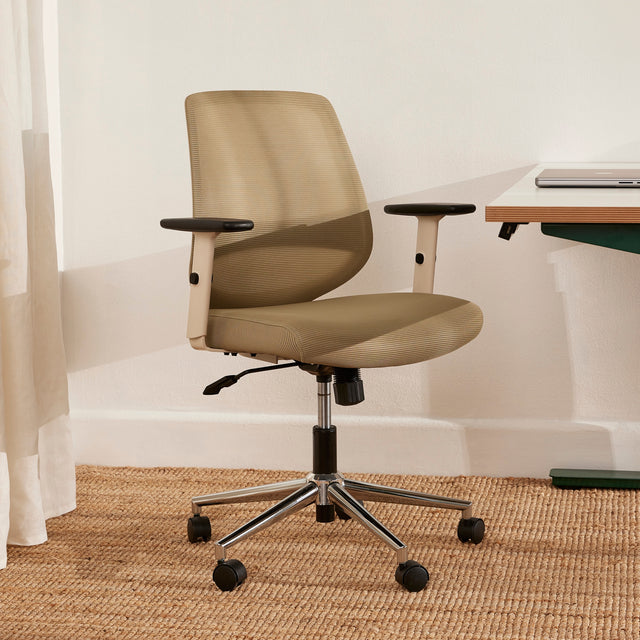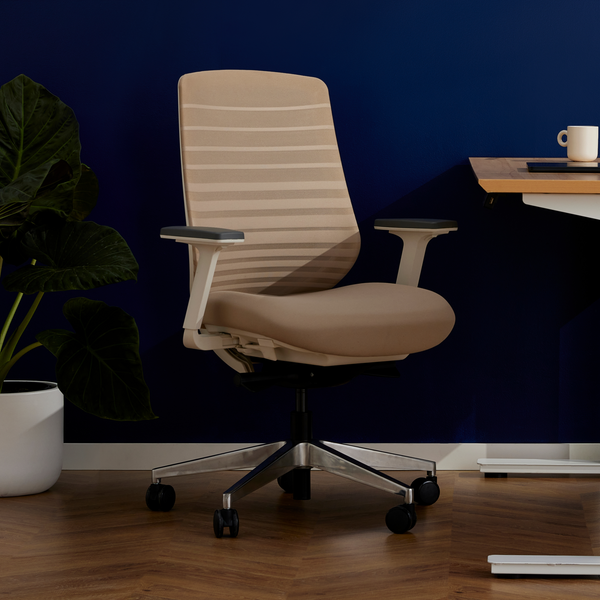
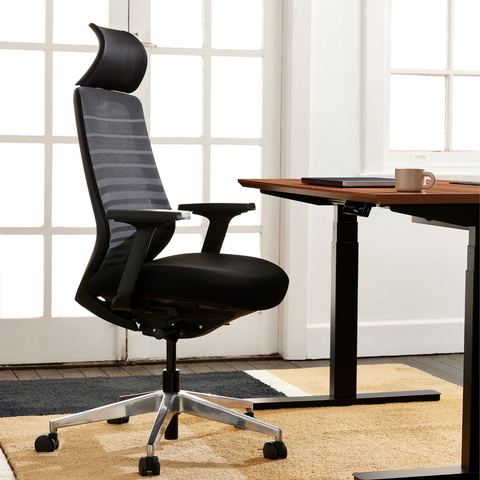
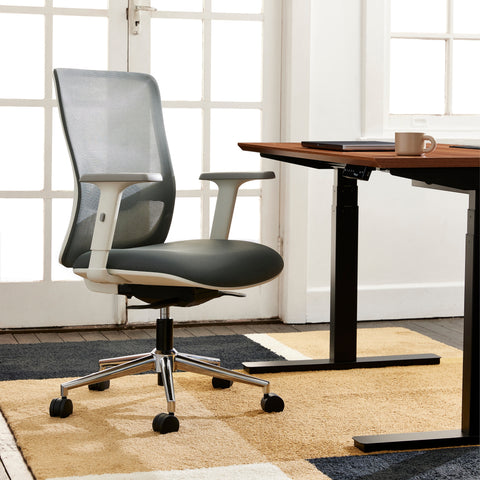
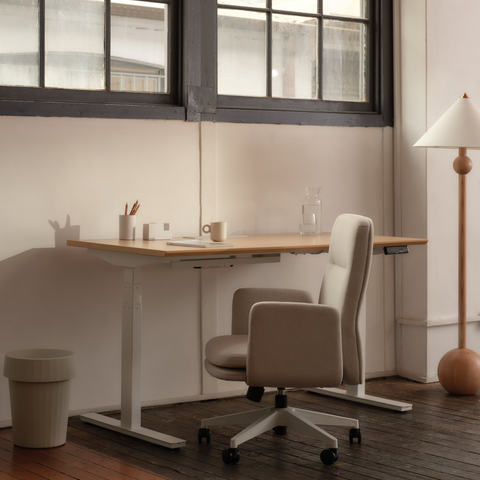
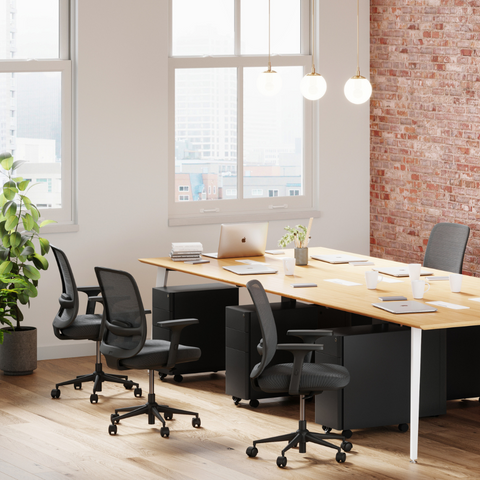


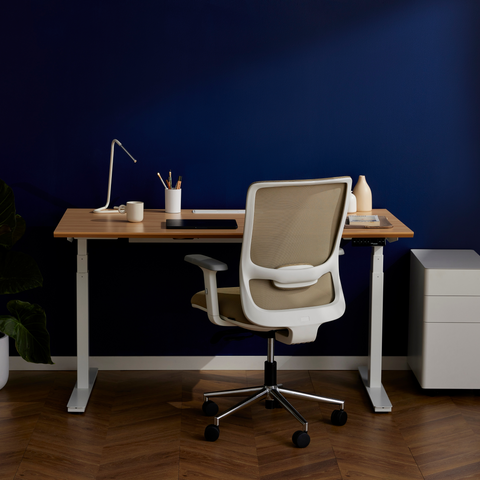
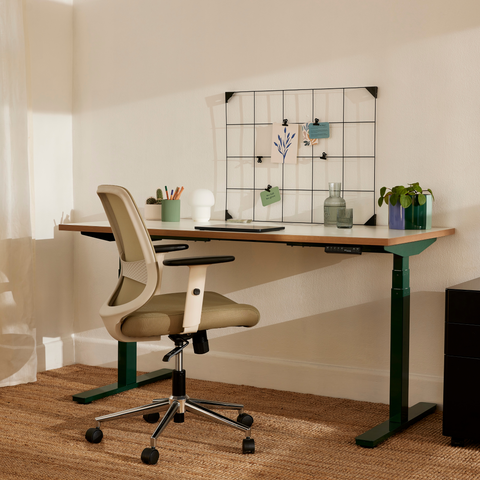



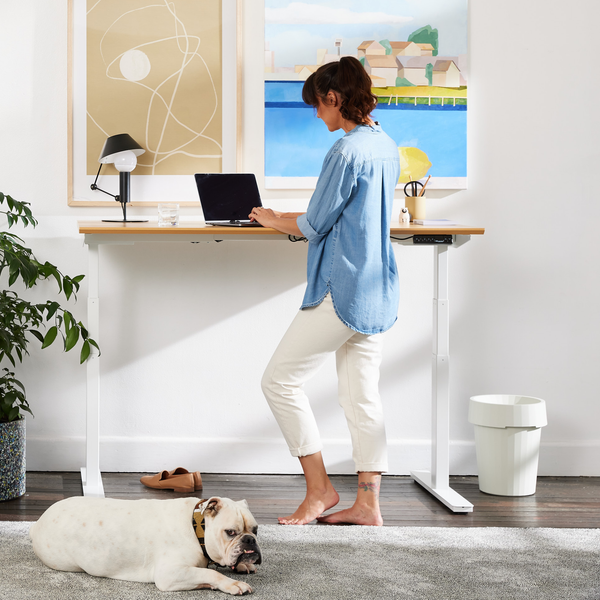
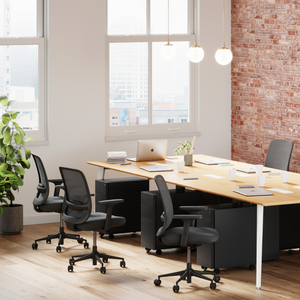

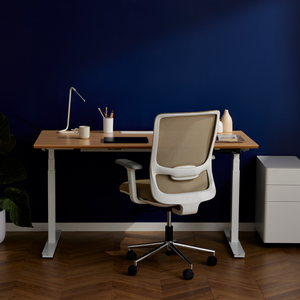
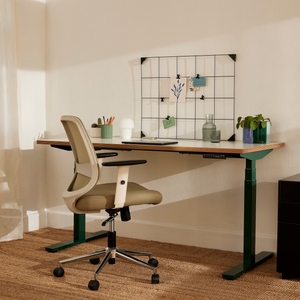


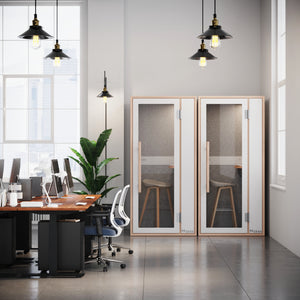

Many folks working from home either started out or are still using chairs that weren’t really designed for long hours of work. Remember that rock-hard dining chair, the odd mismatched chair from the spare room, or that random mesh number you got online that felt fine only the first few weeks?
Practicality-wise, these were workable. But, for those of us who care about our backs, necks, and productivity, we need better options.
While there is truly no single answer to what is the best office chair for working from home, there is a best chair for you, based on how you work, how long you sit, and what your body needs.
Learn what that chair is below.
5 Most Important Features of a WFH Chair
Adjustability
A chair that can't adjust to your body can't support your body.
Most cheap chairs offer just one or two adjustments, which means most people end up sitting in something that's a rough approximation of right for them.
For working from home, you need at minimum a chair that:
- Lets your feet rest flat on the floor
- Has adjustable lumbar support that matches your spine
- Has armrests that keep your shoulders relaxed
Seat depth adjustment is also worth having. It lets you move the seat forward or back so the seat edge sits comfortably behind your knees during long work sessions. They’re small changes but they become noticeable during long work hours.
If you're unsure what these adjustments mean in practice, our Office Chair Buying Guide walks through each one.
Breathability
Sitting in foam or leather during a Sydney summer, a Brisbane afternoon, or even a warm Perth morning is a genuinely different experience from sitting in a breathable mesh chair.
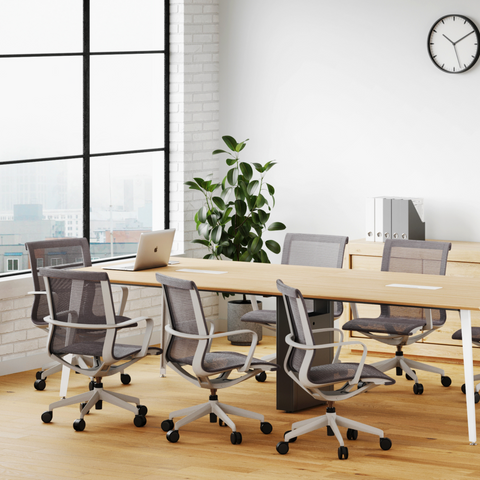
Mesh backs allow air to circulate constantly, which keeps you cooler and more alert across long sessions. Quality mesh also flexes with your movement, providing dynamic support rather than holding you rigid in one position.
If you work in a room without great airflow, this becomes more of a practical need rather than just a premium feature.
Dynamic Office Chair Support
Chairs support the body in different ways. Some hold you in a single rigid position, while others allow the chair to move with you throughout the day.
When you’re working from home, you might lean forward while focusing, recline slightly during calls, or shift position after sitting still for a while. A chair with some flexibility in the backrest can follow these small movements instead of resisting them.
Over the course of a workday, that movement matters. Research consistently links long periods of completely static sitting with higher rates of lower back pain in office workers.
A chair designed to accommodate movement helps distribute pressure on the spine rather than forcing the body to stay locked in one posture.
Proper Size and Space Fit
Many Australians work from a bedroom, a converted nook, or a shared living space that also functions as an office.
A chair that looks fine in a showroom can feel oversized once it’s in a smaller room.
Before buying, check the full dimensions. Width, depth, and backrest height all affect how well the chair fits your space and whether it slides neatly under your desk.
Aesthetics
This is often left out of ergonomics discussions, but how your chair looks among your work setup does matter.
Your chair lives in your home. It shows up on video calls and sits alongside the rest of your furniture.
Imagine if it looks like it was pulled straight from an office fit-out from 2005.
You don’t need to choose between something that works well and something that looks good. Both should be possible.
Our Recommended Office Chairs for Working From Home in Australia

Your best WFH chair depends on how long you sit, what your space looks like, and what your body actually needs. Here's a breakdown of our work from home chairs and which one fits your situation.
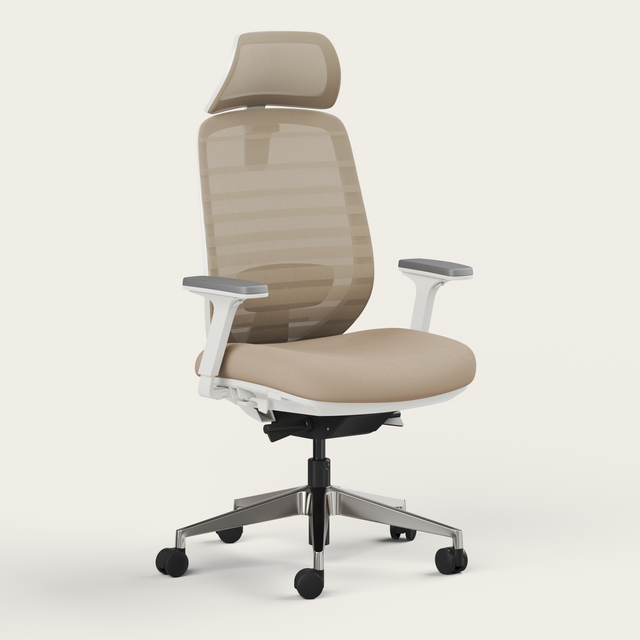
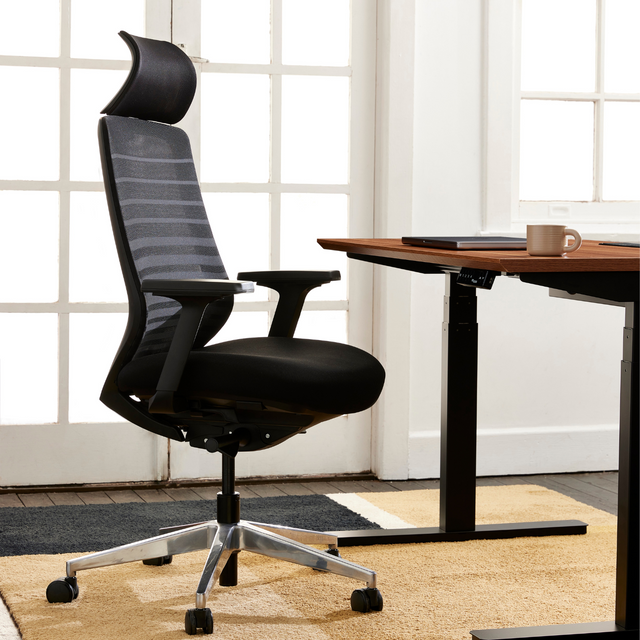
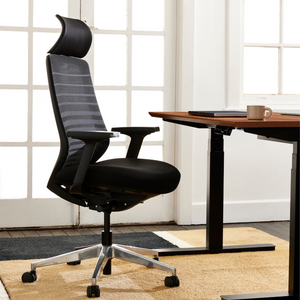
Ergo Pro 2.0 — For full-time WFH
If you're in your chair for most of the working day, the thing you’ll notice most probably won’t be the armrests or the colour, but whether your back still feels okay at 4 pm.
The Ergo Pro 2.0 was built around that problem.
Its lumbar system moves as you do, so whether you're leaning forward through a deadline or reclining through your fifth call of the day, your lower back stays supported without you having to think about it.
The full-mesh back also keeps you cool and comfortable across long sessions, something that matters a lot more when you're in an Australian summer with no office air conditioning to save you.
It also has eight points of adjustment and carries a BIFMA certification for 8+ hours of daily use.
BIFMA is the Business and Institutional Furniture Manufacturers Association, an independent body that puts office furniture through standardised tests for safety, durability, and structural integrity.
An 8+ hour rating means the chair has been stress-tested to handle a full working day, every day, over time. Last but not least, the Ergo Pro 2.0 assembles in just around 15-20 minutes.
Ergo Chair — For balanced ergonomics and value
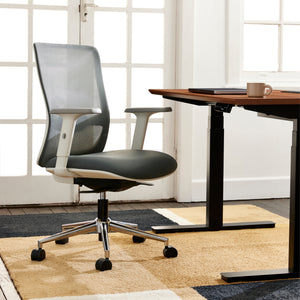
The Ergo chair is a strong first proper ergonomic chair, especially for anyone upgrading from a basic task chair for the first time.
Its adjustable lumbar support rotates to follow the natural curve of your spine rather than pushing into a fixed point on your back. It also includes seat depth adjustment, which allows you to position the front edge of the seat in a way that won’t cut off circulation behind your knees
It has six adjustments in total, independently tested for 6-8 hours of daily use, and supports up to 125kg.
As for the material, you can choose between breathable mesh or vegan leather for what suits your home best.
Ergo Lounge — For creative and reading-heavy work
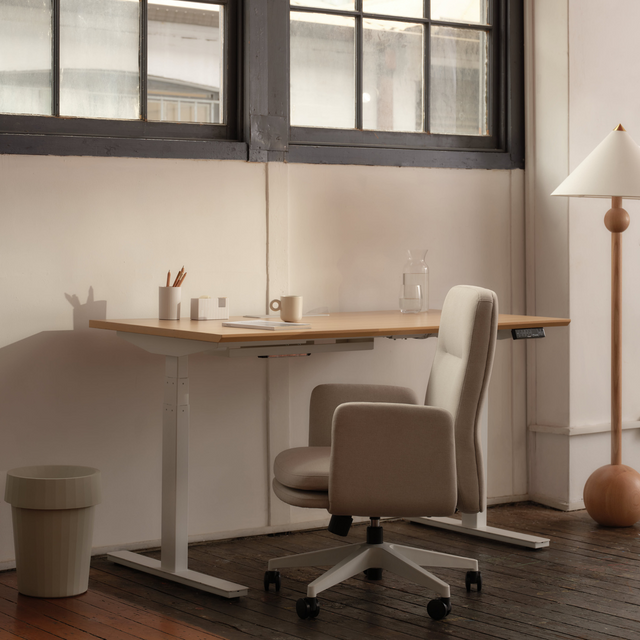
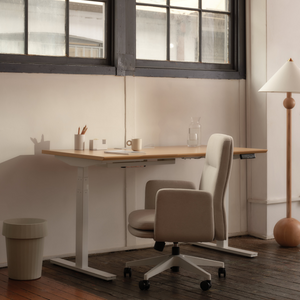
The Ergo Lounge sits in a different category from the task chairs above.
The Ergo Lounge lets you work the way that part of your day actually looks. You can sit up when you need to focus and ease back when you don't, with enough support underneath you that you're not just slumping into a couch.
It's covered in durable polyester fabric, supports up to 130kg, and has three adjustments. It may not be as ergonomically adjustable as the other chairs in the list, but it offers enough comfort and support for tasks such as reading, video calls, thinking, or creative work.
It also looks like it belongs in a home, which matters when your office and living room share a postcode.
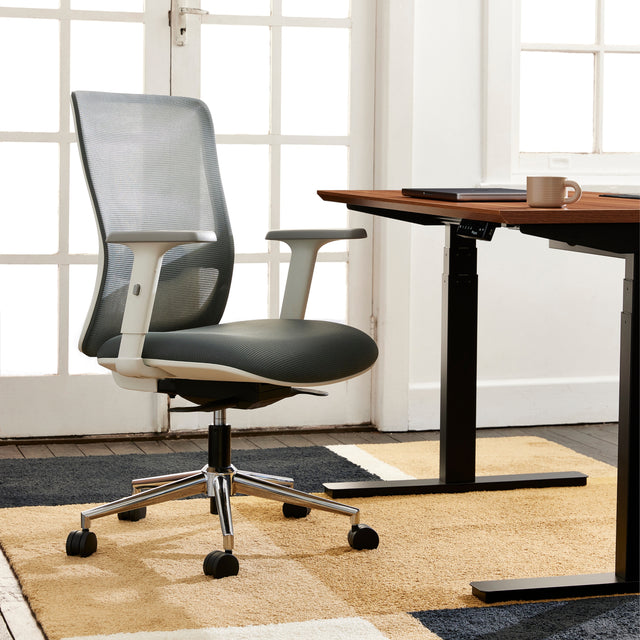
Everyday Chair — For lighter use and compact spaces
If you're working from home two or three days a week, you probably don't need a chair engineered for eight-hour daily use.
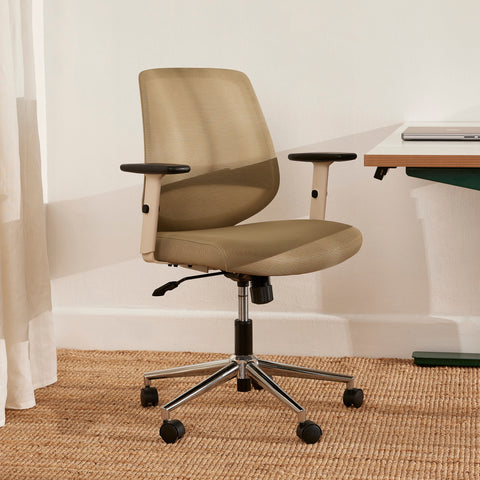
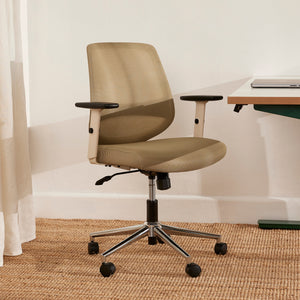
What you need is something comfortable, supportive enough to get through a full day without complaints, and easy to live with in a space that was never designed to be an office. You can get that with the Everyday Chair.
It has four adjustments, a built-in lumbar support, and a foam cushion that meets GREENGUARD standards for indoor air quality. It can also support up to 120kg and comes in mesh or vegan leather, with a few colour options, so it can actually fit into your home rather than clash with it.
This covers the essentials well without the fuller spec price tag.
It suits moderate WFH hours, compact spaces, or anyone who wants something comfy and clean-looking that genuinely fits a home environment.
For a quick side-by-side on the specs:
|
Chair |
Adjustments |
BIFMA daily rating |
Weight capacity |
Price guide (AUD) |
|---|---|---|---|---|
|
Ergo Pro 2.0 |
8 points |
8+ hrs/day |
130kg |
$595 |
|
Ergo Chair |
6 points |
6-8 hrs/day |
125kg |
$445 |
|
Ergo Lounge |
3 points |
Not BIFMA rated (hybrid lounge) |
130kg |
$395 |
|
Everyday Chair |
4 points |
4-6 hrs/day |
120kg |
$345 |
Still not sure which one fits your body and setup? Our 60-second chair quiz can give you a personalised recommendation.
The Real Problem With Most Work From Home Chairs
In a corporate office, your chair was someone else's problem. Facilities ordered and set them up. Once it wore out, you simply lodged a request. That structure wasn’t just convenient but was backed by workplace requirements.
Under Safe Work Australia, employers are responsible for providing properly set-up workstations, a duty that extends to home-based workers as well.
At home though, that safety net falls away in practice. You buy a chair, maintain it, and you're the only person who'll notice when it stops doing its job.
Many work-from-home workers realise too late that this raises the stakes for their health and productivity.
According to the Australian Institute of Health and Welfare, around 7.3 million Australians, or 29% of the population, are living with a chronic musculoskeletal disorder (MSD).
MSDs, which include back, neck, and shoulder pains, are the third largest health burden in Australia, sitting behind only cancer and mental health conditions.
Supporting that, a 2024 report by the Australian Chiropractors Association found that almost half of chiropractors surveyed pointed back to seated or desk work as the primary cause of MSD presentations. They also found that 96% reported treating patients with spinal problems linked to workplace conditions.
What’s worse is that your body doesn't give a formal warning. But there are subtle signs that can alert you.
5 Signs Your Home Office Chair Is Hurting You
Most people don't connect their discomfort to their chair because the pain builds gradually and rarely has a single obvious trigger. These are the signs worth paying attention to:
-
Lower back soreness or stiffness by mid-afternoon, even on days that didn't involve anything physically demanding.
-
The constant need to shift sitting positions, prop a cushion behind your back, or perch on the edge of the seat just to feel okay.
-
Tight shoulders and neck after long stretches of desk work or back-to-back calls.
-
Discomfort that eases when you stand up but returns quickly once you sit back down.
-
A chair that's more than five years old and has never been replaced
Posture and fitness problems can also chip into the equation. But they can also be chair problems.
The good news is that they’re completely fixable.
Budget vs Quality: Is an Ergonomic Chair Worth It?
|
Chair tier |
Typical price (AUD) |
Avg. lifespan |
Best suited for |
|---|---|---|---|
|
Budget (basic task chair) |
$150-$250 |
1-5 years |
Occasional WFH, students, very light daily use |
|
Mid-range ergonomic |
$400-$700 |
7-10 years |
Part-time to full-time WFH, most everyday workers |
|
Premium ergonomic |
$900-$1,500+ |
10-15 years |
Full-time WFH, long hours daily, back pain history |
An $800 chair won’t automatically give you pain-free work days. But at the same time, spending too little might mean you end up replacing it sooner than expected.
The question isn’t which tier is objectively best but rather which tier makes sense for how long and how often you actually work from home. For instance, if you’re working from home full-time, a budget chair that lasts 2-3 years under daily use will cost you more in replacements over a decade than a mid-range chair that lasts 8. If you’re only WFH a couple of days a week, a budget or mid-range chair may be all you need.
For most full-time WFH Australians, the mid-range tier is the sensible call. It gives you the adjustability and durability that daily use requires without the premium price.
The premium tier makes sense if you have a specific health need, sit for unusually long hours, or simply want to buy once and not think about it again for a decade.
All Recess chairs come with a lifetime warranty on the structural frame and two years on mechanisms, mesh, and foam. Spare parts are also available outside the warranty period, so a repair is always an option before replacement becomes necessary.
FAQs
Is a WFH chair worth it if I only work from home a few days a week?
It can be. Even if you're only at home a couple of days weekly, long sitting sessions still add up. Spending five or more hours at your desk puts real strain on your back over time.
If you want something supportive without going all-in on high-end ergonomics, the Everyday Chair is usually a good middle ground.
Can I try a Recess chair before buying?
Yes. Recess has a showroom where you can sit in and test the full range before ordering. It is located at 3 Little Queen St Chippendale, NSW 2008. You can also shop with 30-day returns, giving you time to try it properly in your own space.
What's the difference between the Ergo Chair and the Ergo Pro 2.0?
The main difference comes down to adjustability and long-session support.
The Ergo Pro 2.0 offers eight adjustment points, while the Ergo Chair has six. It also uses a dynamic lumbar system that moves with your posture throughout the day. In terms of durability standards, the Pro 2.0 is BIFMA-rated for 8+ hour use, whereas the Ergo Chair is designed for roughly 6–8 hours.
If you work from home full-time or spend long stretches at your desk, the Ergo Pro 2.0 is typically the better fit. For standard workdays or tighter budgets, the Ergo Chair still covers the essentials well.
Do Recess chairs arrive assembled?
No. They come flat-packed but can be assembled quickly. The Ergo Pro 2.0 takes around 15-20 minutes in 5 steps, and everything you need is in the box.
Customers in Sydney, Melbourne, Brisbane, and Adelaide can also add the 'Sit Back and Relax' assembly and packaging removal service during checkout if they’d rather skip the setup.
Are Recess chairs sustainable?
Absolutely. They’re designed with sustainability in mind. Many components use partially recycled mesh, and the foam meets GREENGUARD standards. Some models also feature vegan leather armrest tops.
The chairs are also shipped in recycled cardboard and avoid styrofoam. The lifetime structural warranty helps as well, since a chair that lasts longer means fewer replacements over time.
Find The Best WFH Chair For You
Your chair is the piece of your WFH setup you're in contact with every hour of every working day. Getting it right is worth the time it takes to choose well.
Browse our full collection or take the 60-second quiz for a personalised recommendation. Fast delivery to metro Sydney, Melbourne, Brisbane, and Adelaide. 30-day returns.
Questions? We're at hello@recess.com.au or book a call on the website.
Author Bio

Will Tungusov is the founder of Recess, a Sydney-based sustainable office furniture startup transforming hybrid workplaces across Australia. Since launching in 2019, Will has led Recess from creating the award-winning Nook soundproof booth to offering a complete range of ergonomic, eco-friendly office solutions. With a focus on eliminating middlemen and prioritising sustainability, Recess has served notable high-growth Australian startups, including Eucalyptus, Lorikeet, Instant One and Tracksuit. Will is passionate about building beautiful, functional workspaces that "don't cost the earth," both environmentally and financially.
Follow Recess: LinkedIn | Facebook | Instagram